What Trends to Watch in Europe: Insights from Our Head of European Payments
Key European payment trends shaping conversion, infrastructure and growth across markets.

The payment sector in Europe is undergoing a tremendous transformation. New technologies, changing consumer expectations and the rise of alternative payment methods are reshaping how merchants think about payment infrastructure.
For businesses expanding across the region, understanding these changes is essential. Europe may operate under shared regulatory frameworks in many areas, but in practice, it behaves like a collection of highly localised payment markets.
To explore what is changing and what merchants should prepare for next, we spoke with Mariya Mihaylova, Head of Europe Payments at finera.
Mariya focuses on building scalable payment strategies across multiple European markets. With several years of hands-on experience working with payment service providers, banks and alternative payment providers, she helps ensure that payment solutions remain fast, compliant and locally relevant for operators across the region.
In this conversation, she shares the trends she believes will define the next phase of payments in Europe.

Payments in Europe Are Becoming More Localised
According to Mariya, the biggest shift in the European payment ecosystem over the past two years is how localised payment strategies have become.
“The biggest change is how localised payments have become,” she explains. “A few years ago, many merchants believed that if they accepted cards, they had Europe covered. Today, that approach simply doesn’t work.”
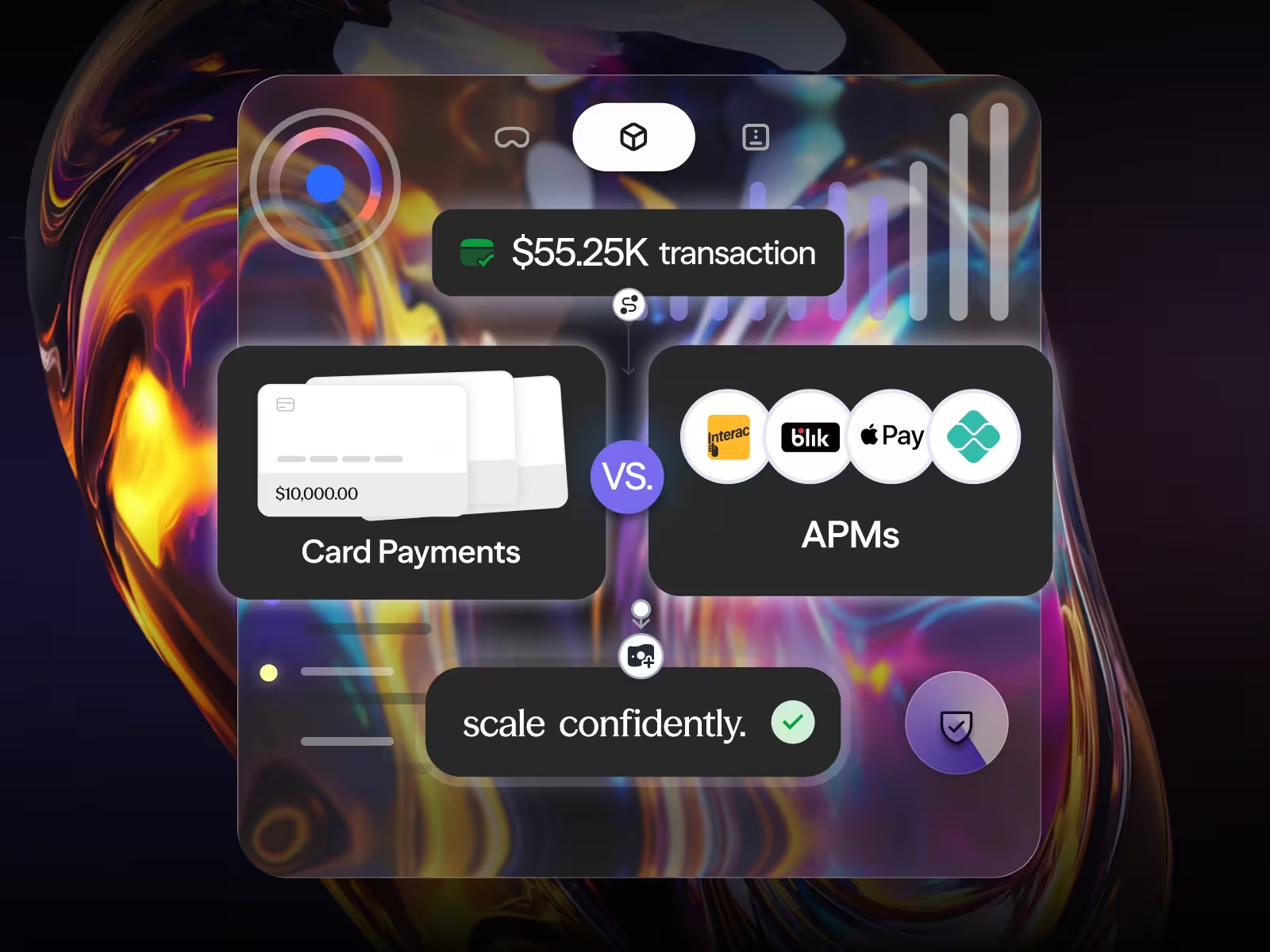
Card payments still play an important role but customer expectations have changed significantly. European consumers increasingly prefer payment methods that feel familiar within their own markets.
Customers may expect instant bank transfers, country-specific bank payment methods or local wallets depending on where they live.
“Customers expect payment options that feel familiar to them,” Mariya says. “Whether that’s instant bank transfers, local wallets or country-specific methods. Merchants are realising that payment localisation is no longer a ‘nice to have’. It’s a core part of the conversion strategy.”
For merchants expanding internationally, this means that simply offering a global payment method is no longer enough. The payment experience must reflect local behaviour.
Payments Are Now Part of the Customer Experience
Another major shift Mariya highlights is the growing importance of speed and user experience.
“What feels fundamentally different today is the level of expectation,” she explains. “Customers are used to instant experiences everywhere, from messaging to deliveries and payments are no different.”
In the past, payments were often treated as background infrastructure. As long as transactions worked, they were rarely seen as a strategic part of the customer journey.
Today, that mindset is changing.
“Payments are no longer just infrastructure,” Mariya says. “They are a critical part of the customer experience and trust.”
Slow withdrawals, complicated authentication processes or missing payment options can quickly erode confidence in a platform. In industries such as iGaming, where user experience is tightly linked to retention, the impact can be even more significant.

Understanding Local Payment Behaviour Is Critical
When merchants or operators ask Mariya where they should focus their attention, her answer is consistent.
“Local payment behaviour,” she says.
Europe may share common regulatory frameworks in some areas, but in reality, it behaves as a network of micro-markets.
“Europe is not one market, it’s dozens of micro-markets,” she explains. “What works perfectly in Germany might not work at all in Italy or the Nordics.”
Each country has its own payment culture shaped by banking infrastructure, regulation and consumer habits. In some regions, cards dominate. In others, bank-based payments or wallets are more common.
"Merchants will always gain a competitive edge in online gaming by understanding the preferred deposit and withdrawal methods of players in each specific market," she noted.
The Growing Importance of Alternative Payment Methods
One of the most visible trends across Europe is the rise of alternative payment methods.
According to Mariya, these options are becoming critical for several reasons.
“In many markets, customers increasingly trust alternative payment methods more than traditional cards,” she explains.
These methods often provide several benefits:
- Faster transaction processing
- Stronger authentication flows
- Familiar local payment experiences
“In markets with strong banking infrastructure, bank-based payments or local wallets simply feel more natural than cards.”
For merchants, this trend is reshaping checkout strategies. Offering the right payment methods can be linked to conversion performance.
Does your Business Only Rely on Cards?
Many international companies still assume that card payments alone are enough to support European markets.
Mariya sees this assumption as one of the most common mistakes.
“The biggest mistake is underestimating how much conversion depends on payment choice,” she says.
If customers reach checkout and their preferred payment option is missing, many will abandon the transaction entirely.
“It’s not always about pricing or product,” she explains. “Sometimes it’s purely about the payment experience.”
For merchants, this means that payment infrastructure can play a significant role in revenue performance.
Bank-Based Payments and Open Banking Are Underestimated
Despite the growth of digital wallets and card payments, Mariya believes many global merchants still underestimate the importance of bank-based payments.
“In many European markets, customers are very comfortable paying directly from their bank account,” she says.
The expansion of open banking and instant bank payments is strengthening this behaviour even further.
“Open banking creates value in two main areas,” she explains.
“First, it can reduce transaction costs compared to some traditional payment rails.”
“Second, it can improve the user experience because authentication happens directly through the bank and often feels smoother and more secure.”
As adoption continues to grow, open banking is expected to become an important pillar of European payment strategies. For merchants that rely primarily on cards, this represents a missed opportunity to improve both trust and conversion.

Real-Time Payments Are Changing Expectations
One of the trends Mariya believes will continue to reshape the payment ecosystem is the rise of real-time payments.
Instant payment infrastructure is gradually expanding across Europe, allowing funds to move between bank accounts much faster than traditional settlement processes.
This shift is influencing how customers evaluate payment experiences.
“Once customers experience instant deposits or withdrawals, they start to expect that everywhere,” Mariya explains.
The expectation of immediacy is becoming particularly important in industries where quick payouts influence user satisfaction.
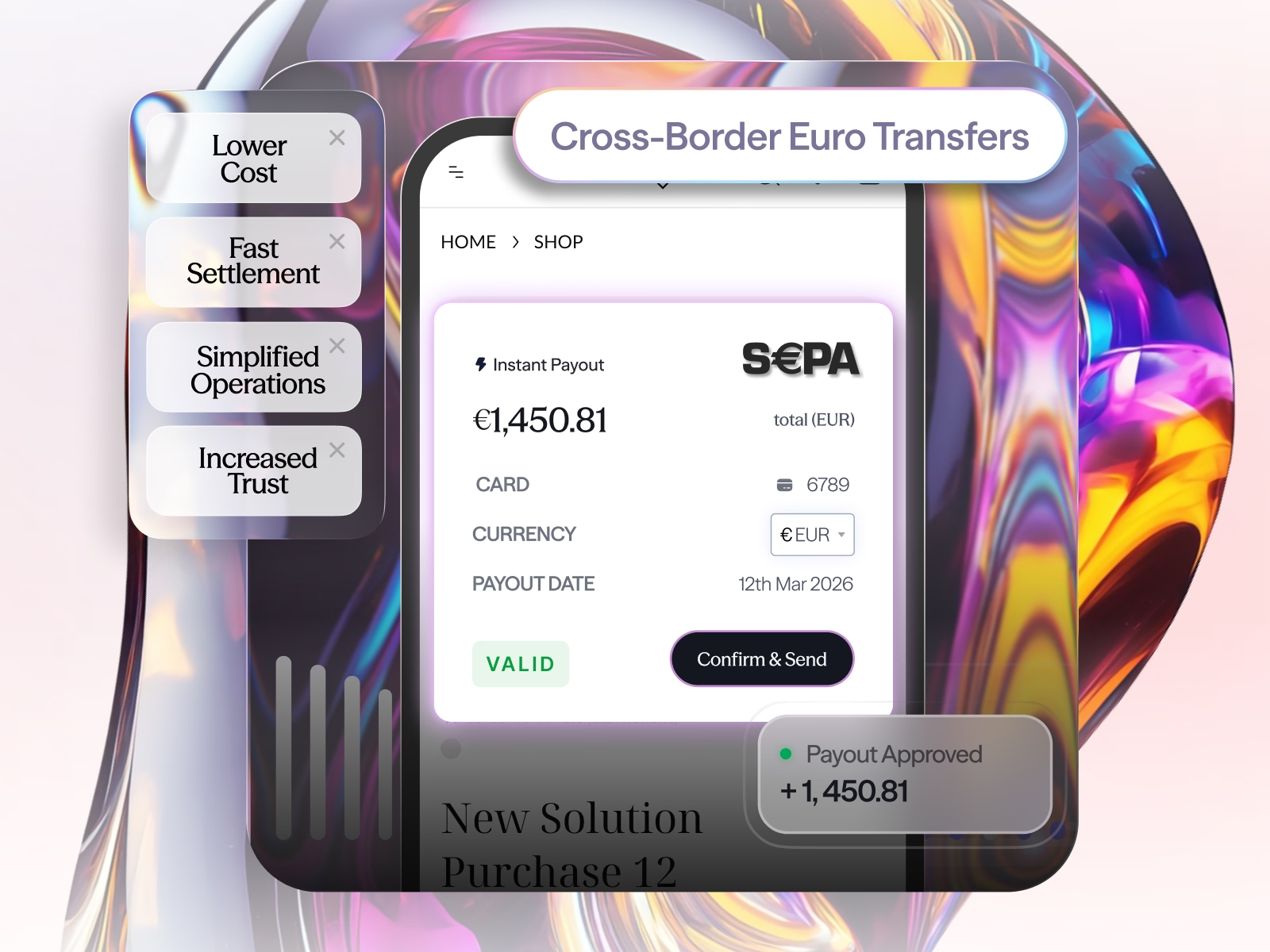
“In the iGaming space especially, fast payouts have become a major competitive advantage.”
Why Payment Orchestration Matters
Increasing payment options and diverse local rules complicate payment infrastructure management.
“Payment complexity will increase,” she says.
Payment orchestration technology helps address this challenge.
“Payment orchestration is becoming essential for companies operating across multiple markets,” Mariya says.
Instead of relying on a single payment service provider, orchestration allows merchants to connect multiple providers, manage routing intelligently and adapt quickly to regional requirements.
“This flexibility makes expansion faster and significantly improves payment performance.”
Looking Ahead to the Next Phase of European Payments
When asked what will define the next stage of payments in Europe, Mariya points to three key developments.
- Continued growth of real-time payment infrastructure
- Stronger adoption of open banking
- Greater localisation of payment experiences
“Merchants that combine these three will be in a strong position.”
Advice for Merchants Preparing for the Next Two Years
For companies preparing for the next phase of growth in Europe, Mariya’s advice is clear.
“Don’t treat payments as a backend function.”
Payments influence conversion rates, customer trust and retention.
“Companies that invest in their payment infrastructure early usually outperform competitors that only think about payments later.”
European Payment Architecture: A Mosaic of Local Behaviours and Expectations
“Europe isn’t a single payment market, but a mosaic of local behaviours, regulations and expectations. The companies that succeed here are the ones that treat payments not as infrastructure but as a strategic part of the customer experience.”
“Payments need to be both global and deeply local at the same time,” Mariya explains.
For merchants expanding across Europe, understanding these differences is essential to building payment systems that support growth.
At finera., we help businesses navigate this complexity with flexible payment infrastructure, including payment orchestration technology, card processing, crypto processing and local alternative payment methods.
Contact the finera. team to explore how the right payment setup can support your expansion across European markets.

This article on payment methods is for informational and educational purposes only.
- Not Professional Advice: The content provided does not constitute financial, legal, tax, or professional advice. Always consult with a qualified professional before making financial decisions.
- No Liability: The authors, contributors, and the publisher assume no liability for any loss, damage, or consequence whatsoever, whether direct or indirect, resulting from your reliance on or use of the information contained herein.
- Third-Party Risk: The discussion of specific payment services, platforms, or institutions is for illustration only. We do not endorse or guarantee the performance, security, or policies of any third-party service mentioned. Use all third-party services at your own risk.
- No Warranty: We make no warranty regarding the accuracy, completeness, or suitability of the information, which may become outdated over time.

Frequently Asked Questions

Still Have Questions?
Let’s Find the Right Solution for You
Stay Connected with Us!
Follow us on social media to stay up to date with the latest news, updates, and exclusive insights!