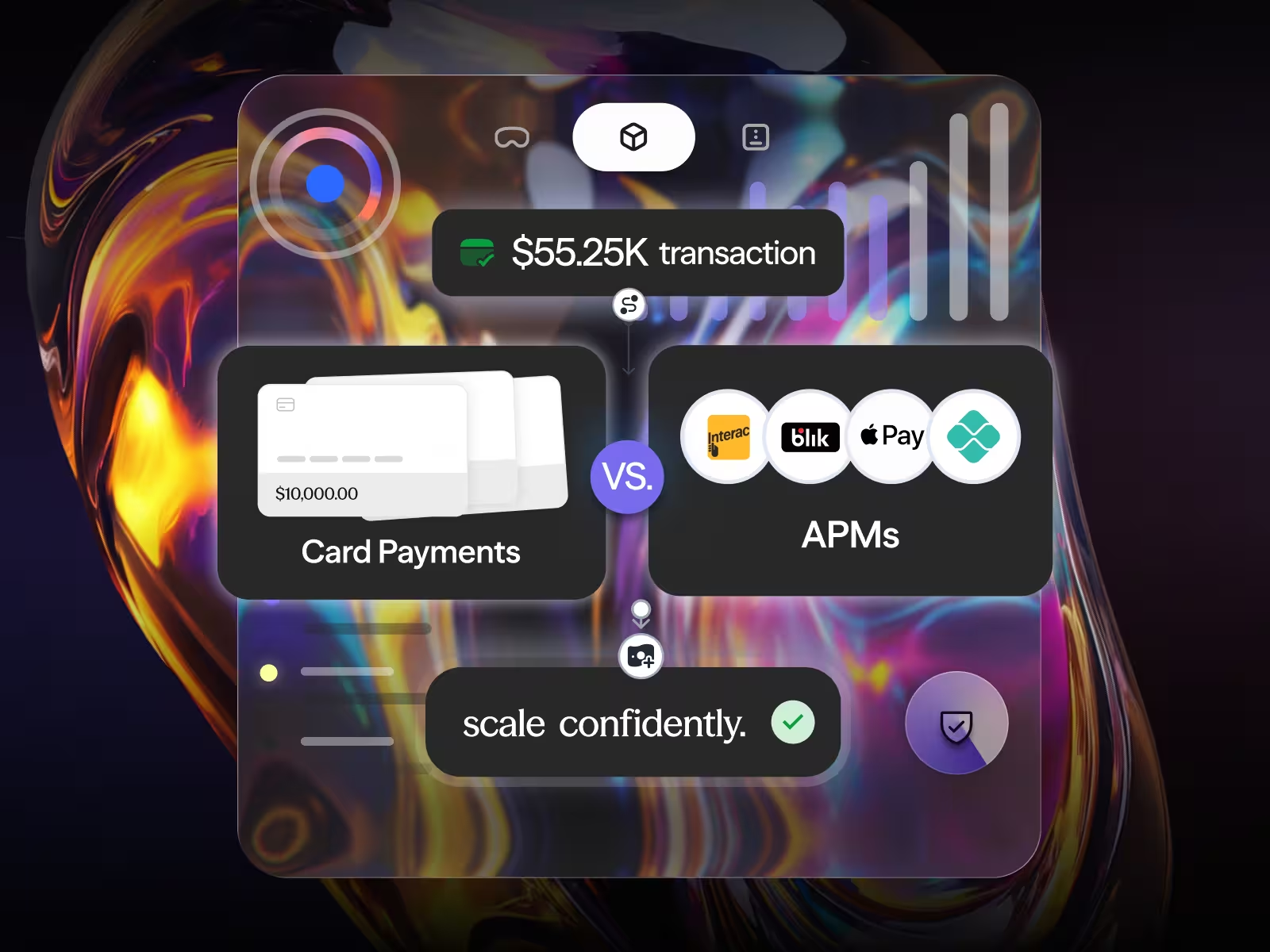
Multi-Rail Payments Guide: A Merchant Strategy
See how a multi-rail strategy brings together Cards, Open Banking and APMs.
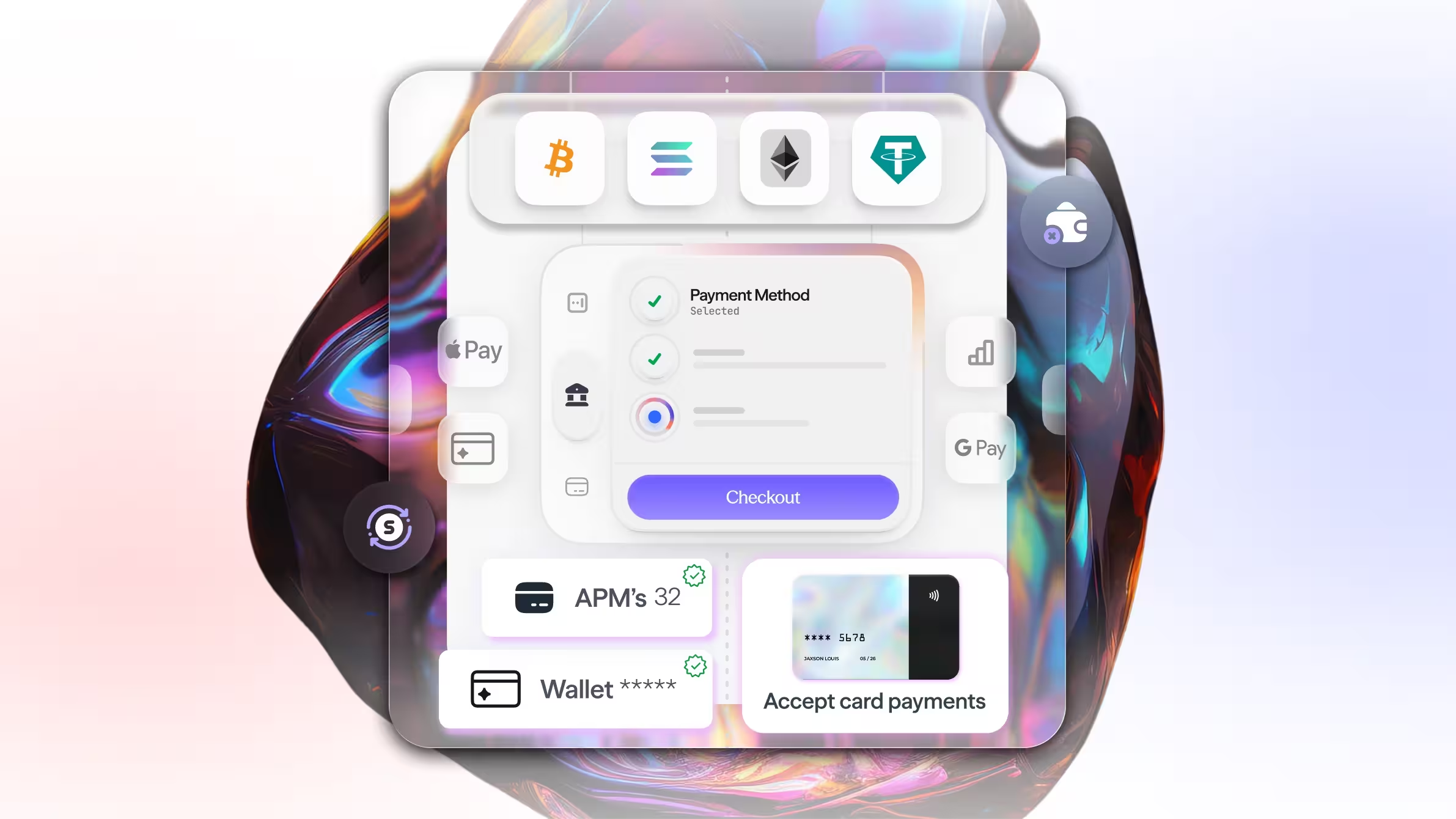
A modern payment strategy need not depend on a single way to move money. Cards remain central, but customer preferences, local banking infrastructure and payment technologies vary by market. Multi-rail payments can give merchants more ways to respond to that reality, while finera’s payment orchestration provides a layer that helps connect and manage those options through one integration.
What Are Multi-Rail Payments?
Multi-rail payments describe a payment strategy that supports more than one mechanism for moving money between a customer and a merchant.
In practice, that can mean combining card payments, account-to-account payments through Open Banking, alternative payment methods such as digital wallets and local bank schemes, and crypto where there is a clear customer and market need.
There is an important technical distinction. Not every alternative payment method is a separate underlying rail. A digital wallet, for example, may ultimately fund a transaction from a card or bank account. For merchants, however, the strategic question is broader: can customers use payment options that fit their market and context without every new option creating another isolated integration?
That is where multi-rail strategy becomes a payment infrastructure decision, not simply a checkout design decision.
Why Cards Alone Are No Longer Enough
Cards still matter. The point is not to replace them. It is to stop treating them as the only default that matters.
The European Central Bank’s SPACE 2024 study found that cards accounted for 48% of online payments in the euro area, while e-payment solutions such as wallets, PayPal, mobile apps and iDEAL accounted for 29%. The mix also changed significantly by country. E-payment solutions represented 76% of online payments in the Netherlands, 46% in Germany and 33% in Portugal.
The same ECB research found that 24% of euro-area consumers had encountered a physical payment location in the previous month where the payment method they preferred was not always offered.
For merchants, the implication is straightforward. Payment preference is not uniform.
A checkout built around one rail can create a mismatch between the way a business accepts payments and the way its customers want to pay.
Understanding the Four Parts of a Multi-Rail Strategy
1. Cards
Cards offer broad international reach, familiar customer journeys and mature processing infrastructure. They remain a core part of most merchant payment strategies.
But card performance can vary according to issuer, geography, currency and acquiring setup. That makes the infrastructure surrounding the card rail important too.
With multiple connected acquirers, smart routing can assess relevant transaction conditions and help select an appropriate path rather than sending every payment through the same provider.
2. Open Banking
Open Banking payments introduce account-to-account payment options that allow customers to initiate payments from their bank accounts through secure connections.
Adoption is no longer theoretical in mature markets. Open Banking Limited’s 2026 review of the previous year reported 351 million UK open banking payments during 2025, an increase of 57% year on year.
That does not mean Pay by Bank should replace cards everywhere. It means bank-based payments deserve a place in the payment mix where customer behaviour and local infrastructure support them.
3. Alternative Payment Methods
APMs cover a wide range of options, including digital wallets, local bank transfer schemes, QR payments and region-specific payment methods.
Their value is local relevance.
A payment method that matters in one market may be marginal in another. The objective should therefore not be to collect the longest possible list of logos.
It should be to identify which payment options make it easier for customers in each target market to complete a transaction.
4. Crypto
Crypto can form another part of the payment mix where customer demand, regulation and the merchant’s operating model make it relevant. It should be treated as a deliberate payment decision, not a universal requirement.
The infrastructure model matters too.
finera.’s crypto processing infrastructure is designed to be non-custodial. This means merchants can generally retain control of their crypto assets rather than transferring custody to finera., helping them add another payment option without giving up ownership of those assets.

Choosing the Right Payment Rails: The Rail-Market-Fit Framework
More rails do not automatically make a better payment strategy. Each option needs to earn its place.
A useful way to assess that is through a Rail-Market-Fit framework:
- Customer Fit: Is the payment method familiar and actively used by customers in this market?
- Market Fit: Does local banking infrastructure, regulation and provider coverage support it effectively?
- Performance Fit: Does the rail support a commercially sensible payment journey for the transactions being processed?
- Operational Fit: Can the business add and manage it without creating disproportionate technical or operational overhead?
The answer will not be identical across every geography. That is the point.
A global payment strategy can have a consistent infrastructure layer while allowing the actual payment mix to change according to local demand.
Payment Diversification Can Strengthen Resilience
Multi-rail payments can also reduce dependency on a single payment method, provider or route.
The distinction matters.
An orchestration platform cannot simply turn a card payment into an Open Banking payment after a customer has already chosen how to pay. Instead, resilience can exist at two different levels.
At checkout, merchants can give customers access to relevant payment methods across different rails. Behind compatible transactions, orchestration can manage multiple connected providers and routes.
Within cards, for example, routing logic can direct transactions towards an appropriate connected acquirer. At checkout level, Open Banking, wallets, local methods or crypto can give customers other legitimate ways to pay.
The result is a payment strategy with more choice at the front and more flexibility behind it.
Payment Orchestration Makes Multi-Rail Payments Manageable
There is an obvious challenge with payment diversification. Every additional provider or method can become another integration, another technical dependency and another part of the payment stack to manage.
Payment orchestration changes that architecture.
Instead of building an isolated technical project around every connection, a merchant connects to an orchestration layer across its payment ecosystem.
finera.’s payment orchestration platform provides access to multiple acquirers and payment capabilities through one integration. Cards can sit alongside Open Banking, local and alternative payment methods and non-custodial crypto processing without requiring the merchant to treat every addition as a separate payment stack.
The value of multi-rail payments is not simply more ways to pay.
It is the ability to choose the right payment options for each market while keeping the infrastructure behind them manageable.
For merchants operating across markets, that is the bigger shift: one connected layer, a payment mix that can adapt to local demand, and less dependence on any single path.
Talk to finera.’s payments team about building a payment strategy around the rails your markets actually need.
This article on payment methods is for informational and educational purposes only.
- Not Professional Advice: The content provided does not constitute financial, legal, tax, or professional advice. Always consult with a qualified professional before making financial decisions.
- No Liability: The authors, contributors, and the publisher assume no liability for any loss, damage, or consequence whatsoever, whether direct or indirect, resulting from your reliance on or use of the information contained herein.
- Third-Party Risk: The discussion of specific payment services, platforms, or institutions is for illustration only. We do not endorse or guarantee the performance, security, or policies of any third-party service mentioned. Use all third-party services at your own risk.
- No Warranty: We make no warranty regarding the accuracy, completeness, or suitability of the information, which may become outdated over time.

Frequently Asked Questions
A payment rail is the infrastructure or network through which money moves between parties. Card networks, bank payment systems and blockchain networks are examples of different rails.
A multi-rail payment strategy gives a merchant access to more than one payment mechanism, such as cards, Open Banking, local payment methods and crypto, so the payment mix can reflect different customer and market requirements.
Payment orchestration acts as a control layer across connected payment providers and methods. It reduces the need for separate integrations and can apply routing logic across compatible providers while giving merchants access to a broader payment ecosystem through one connection.

Still Have Questions?
Let’s Find the Right Solution for You
Stay Connected with Us!
Follow us on social media to stay up to date with the latest news, updates, and exclusive insights!