
Love at First Transaction: Why Smooth Checkouts and Agile Payouts Define Valentine’s Day in 2026
Why payment orchestration, fast checkouts and instant payouts decide who wins Valentine’s Day 2026.

The Rise of the Experience Economy on Valentine’s Day 2026
Valentine’s Day no longer belongs to florists and card shops. By 2026, it has firmly shifted into the Experience Economy, where consumers are not only buying objects but memories. A city break booked at the last minute, a fine dining reservation secured on mobile or a live sports bet placed during a shared evening in, these are now the modern expressions of romance.
This evolution changes everything for merchants. Experiences are emotional purchases, often high in value and almost always time-sensitive. When a transaction fails, it is not just a lost sale, it is a ruined moment. In this environment, the checkout experience becomes part of the product itself.
Valentine’s spending is growing, but not where it used to:
According to the National Retail Federation, in the United States, Valentine’s Day 2025 spending reached a record $27.5 billion, up from $25.8 billion during the year before.
Mobile is now the default starting point for these purchases. According to Statista, cited in Venn Apps, over 60% of global e-commerce transactions are initiated on mobile devices.
Valentine’s Day success in 2026 is no longer dictated by creative campaigns alone. It is defined by the speed, reliability and intelligence of the payment flow.
Why Valentine’s Day Creates Pressure on Payment Infrastructure
Similar to Black Friday or Cyber Monday, Valentine’s Day creates what many merchants describe as a compressed surge window.
Travel searches, restaurant bookings and entertainment spending peak sharply on the evening of 13 February and throughout 14 February itself. Kiwi data indicates a significant surge in travel bookings around Valentine’s Day. In 2023, global bookings on the platform were up 130%, while within Europe, bookings had doubled.
This concentration of demand creates an uncomfortable truth for merchants. A system that usually performs well 360 days a year can still fail spectacularly during Valentine’s weekend.
The hidden danger of relying on a single payment provider
Many businesses still depend on a single payment service provider or acquiring route. Under normal conditions, that approach feels efficient. Under peak pressure, it becomes fragile.
A brief latency increase, a local gateway issue or a regional outage can cascade into global revenue loss. For a Valentine’s booking or live bet, customers rarely retry multiple times. They abandon, move to a competitor, and do not come back.
How payment orchestration protects revenue when it matters most
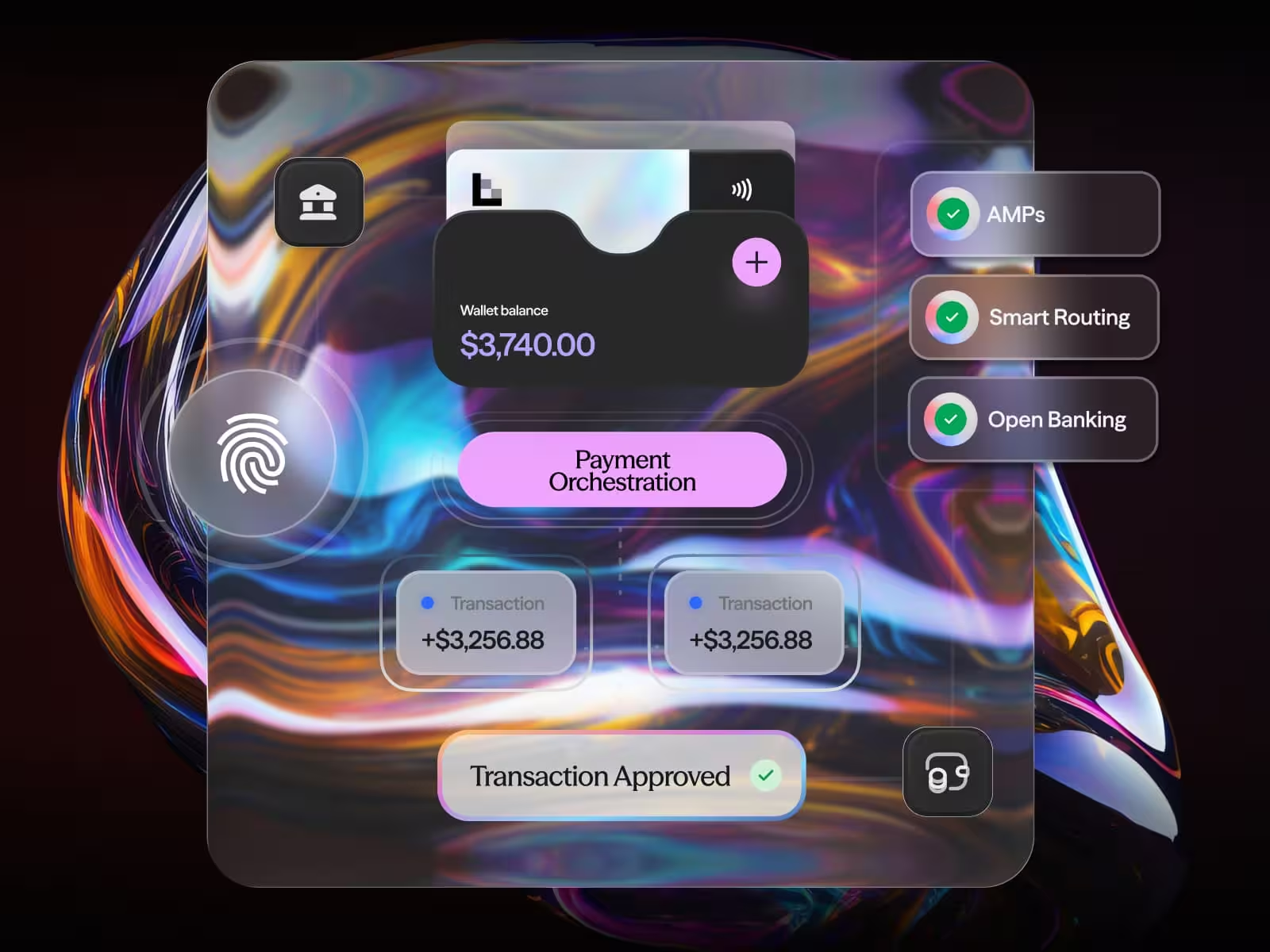
Payment orchestration helps remove this single point of failure. Through finera.’s orchestration layer, transactions are monitored and routed across multiple providers based on real-time performance.
If one route shows increased latency or error rates, traffic is automatically redirected elsewhere. If an authorisation fails due to a temporary or technical issue, the system can retry via an alternative route without customer involvement.
The result is higher approval rates exactly when volumes peak. For merchants, this means Valentine’s Day becomes an opportunity, not a stress test.
High-Value Experiences and the Checkout Friction Problem
Valentine’s Day 2026 is defined by travel and hospitality. According to Skyscanner’s travel outlook, 84% of travellers plan to maintain or increase travel spending, with younger generations prioritising experiences over physical goods.
For merchants, this creates a paradox. As average transaction values rise, legacy risk systems often treat these purchases as suspicious, even when they are completely legitimate.
Why expensive romantic bookings fail more often than they should
High-value bookings are more likely to be cross-border, mobile-initiated and time-sensitive. Unfortunately, many fraud controls were designed for low-ticket retail transactions.
The European Central Bank has repeatedly noted that false fraud positives are a major contributor to failed cross-border card payments, particularly in travel and hospitality.
For Valentine’s customers, this friction does not feel like security. It feels like rejection.
Using orchestration to balance risk and conversion
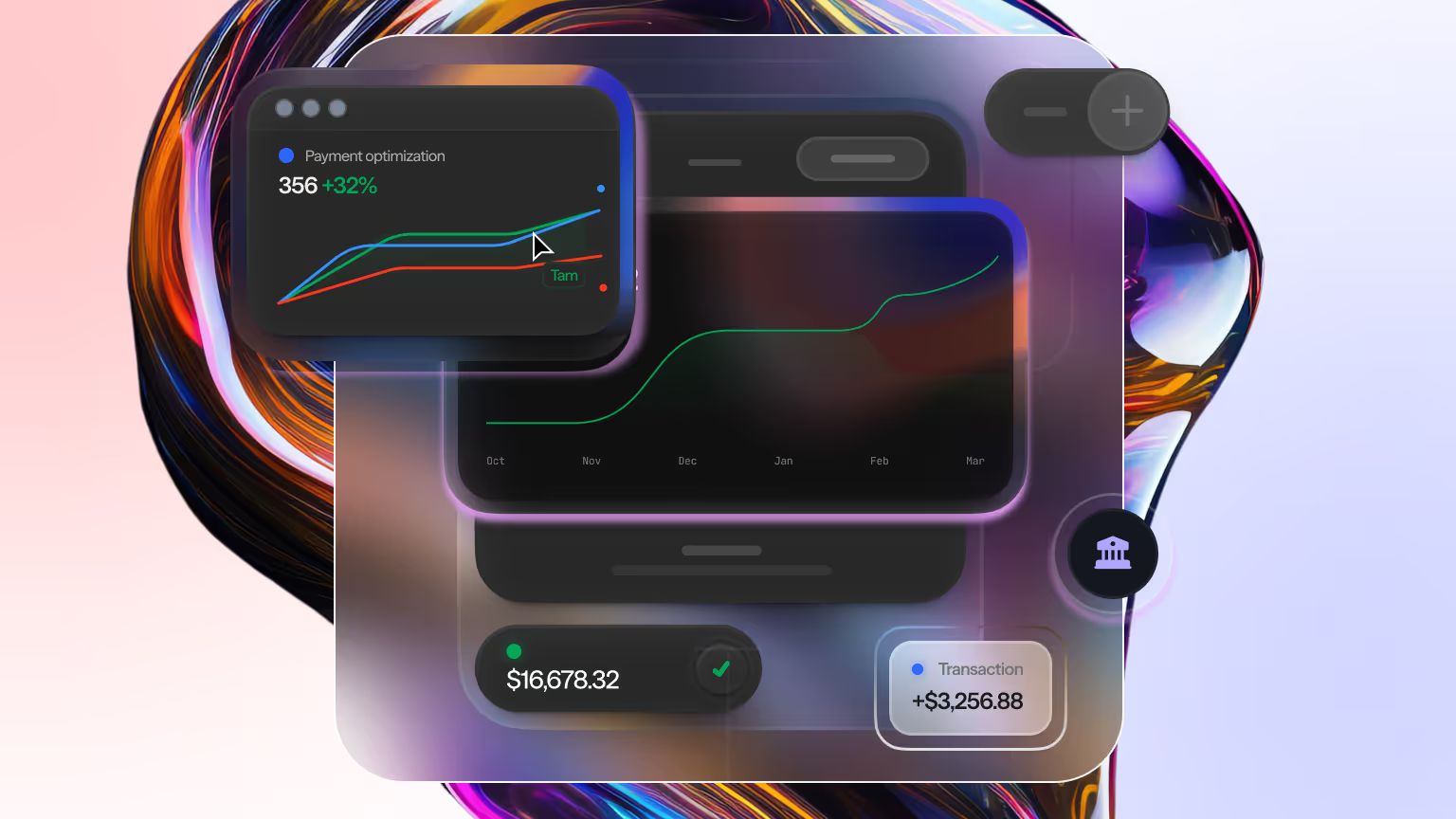
Payment orchestration allows merchants to assess transactions in context rather than isolation. finera. enables contextual risk scoring that considers factors such as device behaviour, booking patterns and customer location consistency.
A €500 boutique hotel booking made on a smartphone in Paris looks very different from a random high-value retail purchase. Orchestration makes that distinction in real time, approving genuine transactions while still protecting against fraud.
Local payment methods still matter, even for luxury
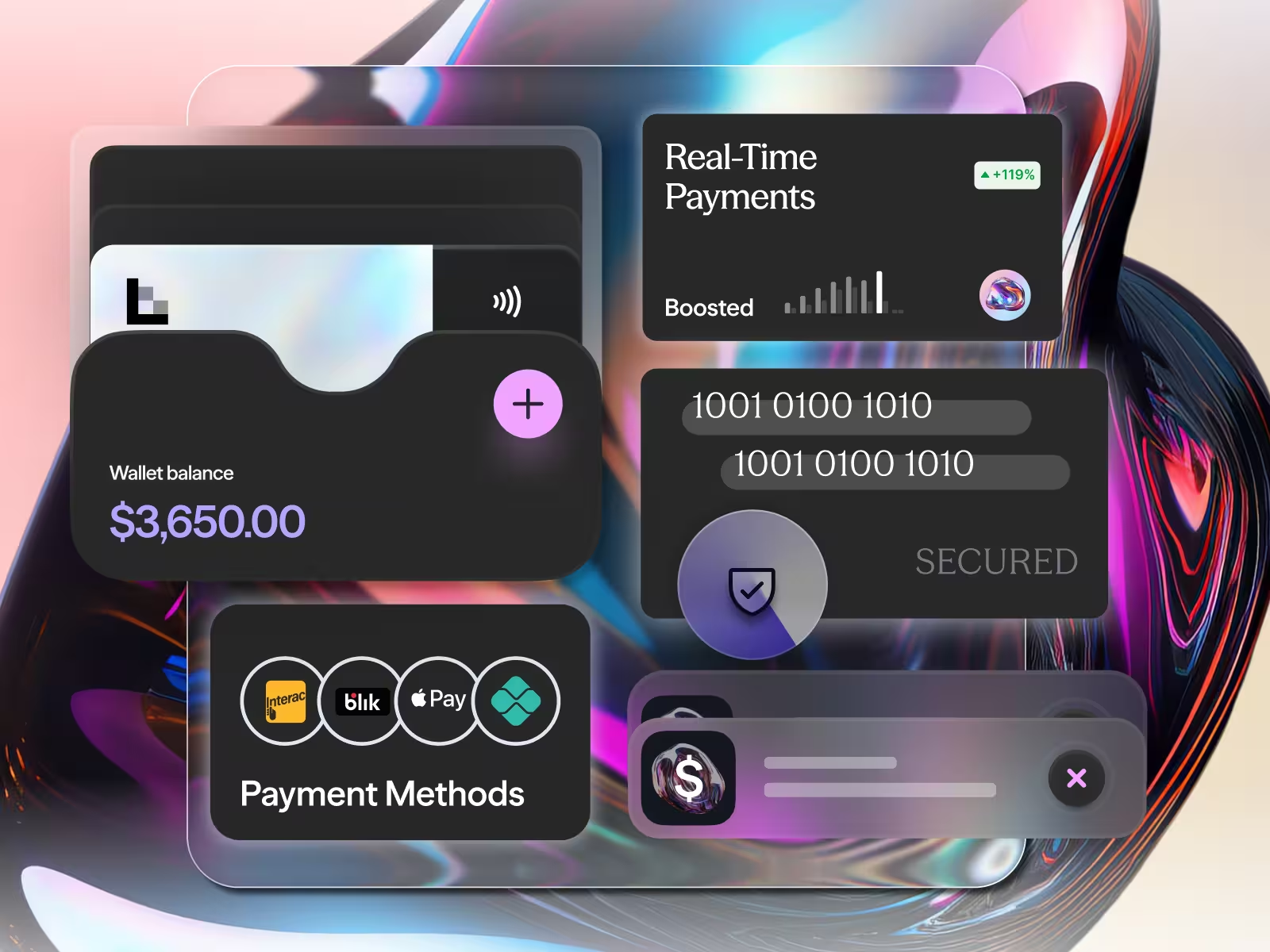
Nothing can disrupt conversion faster than unfamiliar payment options. A Canadian customer booking a European hotel expects to see familiar methods such as Interac, local cards or preferred wallets.
Baymard Institute reports 10% abandon because there aren’t enough payment methods and also lists other checkout failure drivers like 15% ‘website had errors/crashed’ and 8% ‘card was declined’.
Through local card payouts and intelligent routing, finera. helps merchants present the right payment experience to the right customer, regardless of geography.
iGaming, Live Sport and Why Payout Speed Equals Trust
Valentine’s Day 2026 coincides with a packed European football calendar, including domestic league fixtures like FA Cup games in England and the Scottish Premiership. For many couples, date night now includes live sport and second-screen betting.
In iGaming, this matters because the customer’s perception of fairness and excitement no longer ends at the bet. It ends at the payout.
In 2026, the payout is part of the entertainment
The growth of real-time data and high-speed mobile networks has normalised near-instant bet settlement. Players expect winnings to be available immediately, not days later.
Peer-reviewed research from The Society for Personality and Social Psychology finds immediate rewards predict greater persistence/adherence than delayed rewards, supporting the behavioural mechanism behind faster payout improving repeat engagement. For sportsbooks, payout speed has become a core differentiator.
How agile payouts drive retention
Through payment orchestration, finera. integrates fast payment rails such as Original Credit Transactions and local card payouts.
This enables winnings to reach players within minutes, sometimes seconds. The commercial impact is clear. Customers who receive funds instantly are far more likely to stay active, redeposit and remain loyal to the platform.
In a competitive iGaming market, trust is not built through marketing messages. It is built through consistent, fast outcomes.
Preparing for the Rest of 2026 Starts on Valentine’s Day
Valentine’s Day is more than a seasonal spike. It is a preview of what the rest of 2026 will demand from payment infrastructure.
Transaction volumes are sharper and more concentrated. Basket values are higher and increasingly cross-border. Customers expect instant confirmation and instant access to funds.
These expectations should not retreat after February. They should intensify through major sporting tournaments, holiday travel peaks and global shopping events. A traditional payment gateway processes transactions. A payment orchestration strategy optimises them across providers, regions and payment types.
With finera., many merchants gain resilience during peak demand, higher approval rates for high-value experiences and faster payouts that build long-term trust.
Valentine’s Day is often described as a test of romance. In 2026, it is also a test of payment maturity. If your payment stack can handle the pressure of the Love Economy, it can handle the rest of the year.
Talk to our experts and learn how to optimise your payment stack.
This article on payment methods is for informational and educational purposes only.
- Not Professional Advice: The content provided does not constitute financial, legal, tax, or professional advice. Always consult with a qualified professional before making financial decisions.
- No Liability: The authors, contributors, and the publisher assume no liability for any loss, damage, or consequence whatsoever, whether direct or indirect, resulting from your reliance on or use of the information contained herein.
- Third-Party Risk: The discussion of specific payment services, platforms, or institutions is for illustration only. We do not endorse or guarantee the performance, security, or policies of any third-party service mentioned. Use all third-party services at your own risk.
No Warranty: We make no warranty regarding the accuracy, completeness, or suitability of the information, which may become outdated over time.

Frequently Asked Questions

Still Have Questions?
Let’s Find the Right Solution for You
Stay Connected with Us!
Follow us on social media to stay up to date with the latest news, updates, and exclusive insights!



.avif)