UPI Sets the Pace for Indian Payments: Fast, Mobile-First, Always On
A practical guide to UPI payments for Indian e-commerce and digital entertainment.
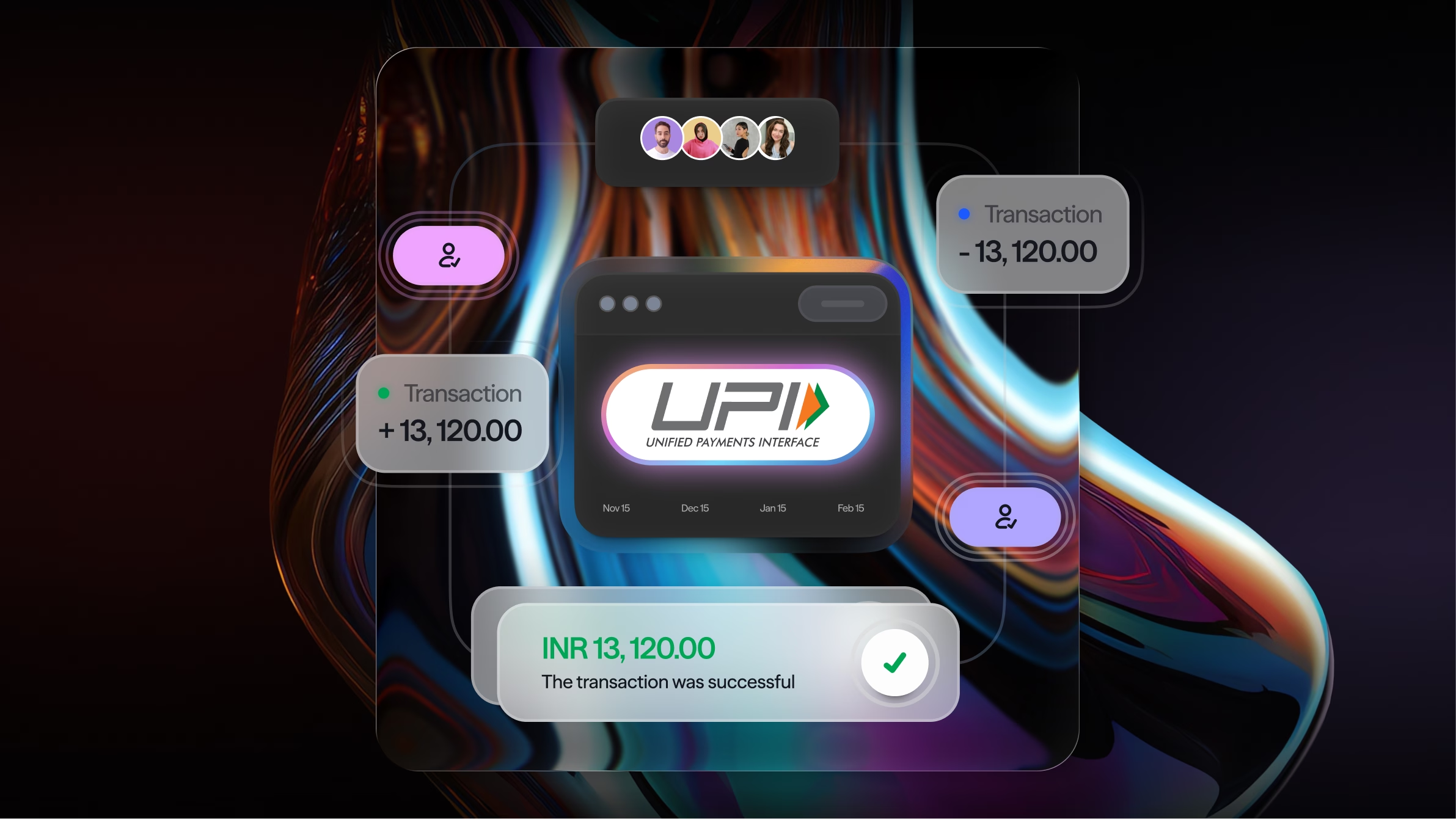
India provides a significant case study for the trajectory of digital payments. What started as a local infrastructure project has emerged as one of the world’s leading real time payment systems. The Unified Payments Interface, better known as UPI, is an established infrastructure for moving money between bank accounts. It is increasingly influencing how hundreds of millions of people pay, shop, play, travel and send money every single day.
And the scale is hard to ignore. In January 2026 alone, UPI processed 21.70 billion transactions, setting a new monthly record for the system and reinforcing its position as a primary pillar of India’s digital economy. That is not just growth, it is behavioural change at a national scale.
For merchants operating in high-volume digital industries, UPI is no longer something to “keep an eye on”. It is a payment method that is increasingly influential in shaping customer expectations.
What is UPI and Why Has it Become So Important?
UPI is India’s real-time, mobile-first, bank-to-bank payment system. It allows consumers to pay directly from their bank account using a Virtual Payment Address or a QR code, without entering card details or waiting for delayed settlements. Payments are typically confirmed in real time and funds move in real time and the experience is designed primarily for smartphones.
At a practical level, UPI changes the payment experience in three important ways:
- High speed payment: Money moves from customer to merchant in real time.
- Mobile-first design: Built for app-based journeys rather than adapted from desktop banking flows.
- Direct bank-to-bank payments: Reducing reliance on card networks and intermediaries.
This simplicity is intentional, as the UPI was built for a country where mobile devices leapfrogged desktop computing and where ease of use is often the difference between adoption and abandonment. Instead of asking users to remember long card numbers, expiry dates and one-time passwords, UPI lets them pay with a couple of taps inside apps they already use, such as Google Pay.
The result is a payment experience that feels less like “checking out” and more like sending a message. That shift matters, especially in mobile-first markets where every extra step increases the chance that a user simply gives up and leaves.
UPI by the Numbers: A System Operating at National Scale
UPI’s growth is not incremental, it is structural. According to a BCG report, the network is now used by more than 504 million unique consumers and over 65 million merchants across India. That is not just wide adoption, it is near-universal relevance in everyday commerce.
On a global level, the scale is even more striking. The International Monetary Fund has highlighted UPI as a model for digital payments, noting that India’s system now accounts for around 49%of all global real-time payment transactions. In other words, nearly half of the world’s real-time payments flow through one infrastructure.
And the momentum continues. In January 2026, UPI transaction volumes grew 28%year-on-year to reach 21.70 billion transactions in a single month. That is not just a record, it is a signal that real-time, account-to-account payments have become the preferred method for hundreds of millions of people.
When a payment system reaches this level of scale, it becomes more than “just another option” and helps shape expectations for speed, availability and user experience. In that sense, UPI is not only shaping Indian payments but is increasingly setting a benchmark for how real-time payments should operate globally.
Fast, Mobile-First, Always On: Why This Model Works
There is a simple reason UPI fits so naturally into everyday life. It is designated to align with how people already use their phones.
UPI offers a high – speed processing, significantly reducing the time spent . Typically funds clear in real time within one or two business days. When a customer pays, the merchant receives the money in real time . That changes cash flow dynamics and reduces operational uncertainty.
UPI is mobile-first. It was designed for small screens and app-based journeys, rather than being solely adapted from desktop banking flows. This matters in markets where most users experience the internet primarily through their phone.
UPI is designed to be always on. It is intended to be 24 hours available a day, seven days a week, including weekends and holidays. For digital businesses that never sleep, this is not a nice-to-have feature, it is a baseline requirement.
Together, these three characteristics create something more than convenience. They increase trust. Customers can expect a reliable payment experience and merchants can expect timely receipt of funds, and the underlying infrastructure is designed to operate seamlessly in the background.
Why UPI Fits in High-Volume Industries
Different industries feel payment friction in different ways but they all feel it. UPI’s design makes it particularly effective in high-intent, mobile-first environments:
- Digital Entertainmnet: Where users expect instant deposits, real-time balance updates and minimal interruption.
- e-Commerce: Where reducing checkout steps on mobile can directly improve conversion and reduce abandonment.
- Travel: Where customers often book on the move and want fast, reliable payments without depending on physical cards.
Across all these verticals, the pattern is the same. When payments feel effortless, users are more likely to complete more transactions. When funds settle in real time , businesses can manage cash flow with greater predictability.
UPI, Cards, Wallets and the Reality of Modern Payment Mixes
It is important to be clear about one thing.
UPI is not necessarily intended to replace cards or make digital wallets irrelevant. Cards remain essential for international transactions, higher-ticket purchases and certain customer segments. Wallets continue to play an important role in device-based ecosystems and global checkout experiences.
But what UPI has done is redefine the default for everyday payments in India. It has become a first choice for millions of users because it is often faster, simpler and more aligned with how they already use their phones. In that sense, UPI has shifted the centre of gravity in Indian payments and, in doing so, it offers a glimpse of where global real-time payments are heading.
As more markets look to build or expand their own real-time payment infrastructure, UPI increasingly stands as a reference point for what “good” looks like at scale.

The Business Case for Merchants, Beyond Just Volume
From a merchant perspective, UPI brings together several practical advantages. It improves the customer experience by reducing friction at checkout. It supports enhanced cash flow through near real-time settlements. It may operate in a lower cost environment compared to traditional card payments, depending on the specific implementation and Merchant Agreement. And it aligns your business with how Indian consumers already prefer to pay.
In a market where more than 500 million consumers actively use UPI, meeting customers where they are is not just good UX, it can be a good strategy.
UPI Integration is Now Available Through finera.
At finera., we believe modern merchants should not have to choose between global reach and local relevance. That is why we have added UPI to our payment mix, making it available to merchants who want to serve the Indian market with a payment method that is typically real time, mobile-first, and truly bank-to-bank.
With UPI now live on finera., you can:
- Offer customers one of India’s most trusted and widely used payment methods
- Benefit from near real-time payments and the potential for improved cash flow
- Reduce checkout friction in high-conversion, mobile-first journeys
- Support use cases across high-volume industries.
UPI represents more than just a local payment method. It is a system that has significantly influenced how a large portion of the country pays and increasingly, it is helping to set standards for what real-time payments can look like at a global scale.
If you are ready to add UPI to your payment stack, reach out to the finera. team today to discuss the onboarding process and assist to make your checkout experience faster, simpler and more aligned with how your customers already pay.
This article on payment methods is for informational and educational purposes only.
- Not Professional Advice: The content provided does not constitute financial, legal, tax, or professional advice. Always consult with a qualified professional before making financial decisions.
- No Liability: The authors, contributors, and the publisher assume no liability for any loss, damage, or consequence whatsoever, whether direct or indirect, resulting from your reliance on or use of the information contained herein.
- Third-Party Risk: The discussion of specific payment services, platforms, or institutions is for illustration only. We do not endorse or guarantee the performance, security, or policies of any third-party service mentioned. Use all third-party services at your own risk.
- No Warranty: We make no warranty regarding the accuracy, completeness, or suitability of the information, which may become outdated over time.
.avif)
Frequently Asked Questions

Still Have Questions?
Let’s Find the Right Solution for You
Stay Connected with Us!
Follow us on social media to stay up to date with the latest news, updates, and exclusive insights!