Crypto Payments vs Traditional Cards: What Merchants Should Know
A comparison of crypto and card payments to help merchants define their payment strategy.

Digital payments are evolving quickly. While credit and debit cards remain the backbone of online commerce, cryptocurrencies are becoming an increasingly visible part of the payments conversation.
For merchants expanding globally, the question is no longer whether crypto payments exist. The real question is whether they should be considered alongside traditional payment methods.
Understanding how crypto payments vs traditional cards compare can help merchants decide how these options fit within a broader payment strategy.
Why Payment Choice Matters for Merchants
Payments are one of the most important conversion points in any online business. If customers cannot pay in a way that feels familiar or convenient, they often abandon the transaction altogether.
At the same time, payment infrastructure affects much more than the checkout experience. It also influences settlement times, processing costs, fraud management and cross-border accessibility.
For merchants operating across regions, these factors become even more important. What works well in one market may not perform the same way in another.
That is why many businesses are exploring a multi-rail payment strategy, combining cards, digital wallets, alternative payment methods and increasingly, crypto payments.
Understanding how each option works helps merchants build a more resilient payment ecosystem.

Card Payments: A Current Standard
Credit and debit cards remain the dominant payment method for many online businesses. Their widespread adoption, strong consumer familiarity and established infrastructure make them a reliable default option.
Card networks such as Visa and Mastercard connect banks, merchants and payment processors through a mature global system. This ecosystem has developed over decades and supports billions of transactions every day.
For merchants, card payments offer several advantages.
- First, they are widely accepted across most markets. Many consumers expect to pay by card, particularly in North America and Europe.
- Second, card infrastructure includes built-in dispute and chargeback mechanisms, which can help protect consumers and maintain trust in the payment system.
- Third, card payments integrate easily with existing checkout experiences and payment gateways.
However, merchants often complement them with additional payment options.
Crypto Payments: A Growing Alternative
Cryptocurrency payments operate differently from traditional card networks. Instead of relying on issuing banks and card schemes, transactions are recorded on blockchain networks and typically initiated through digital wallets.
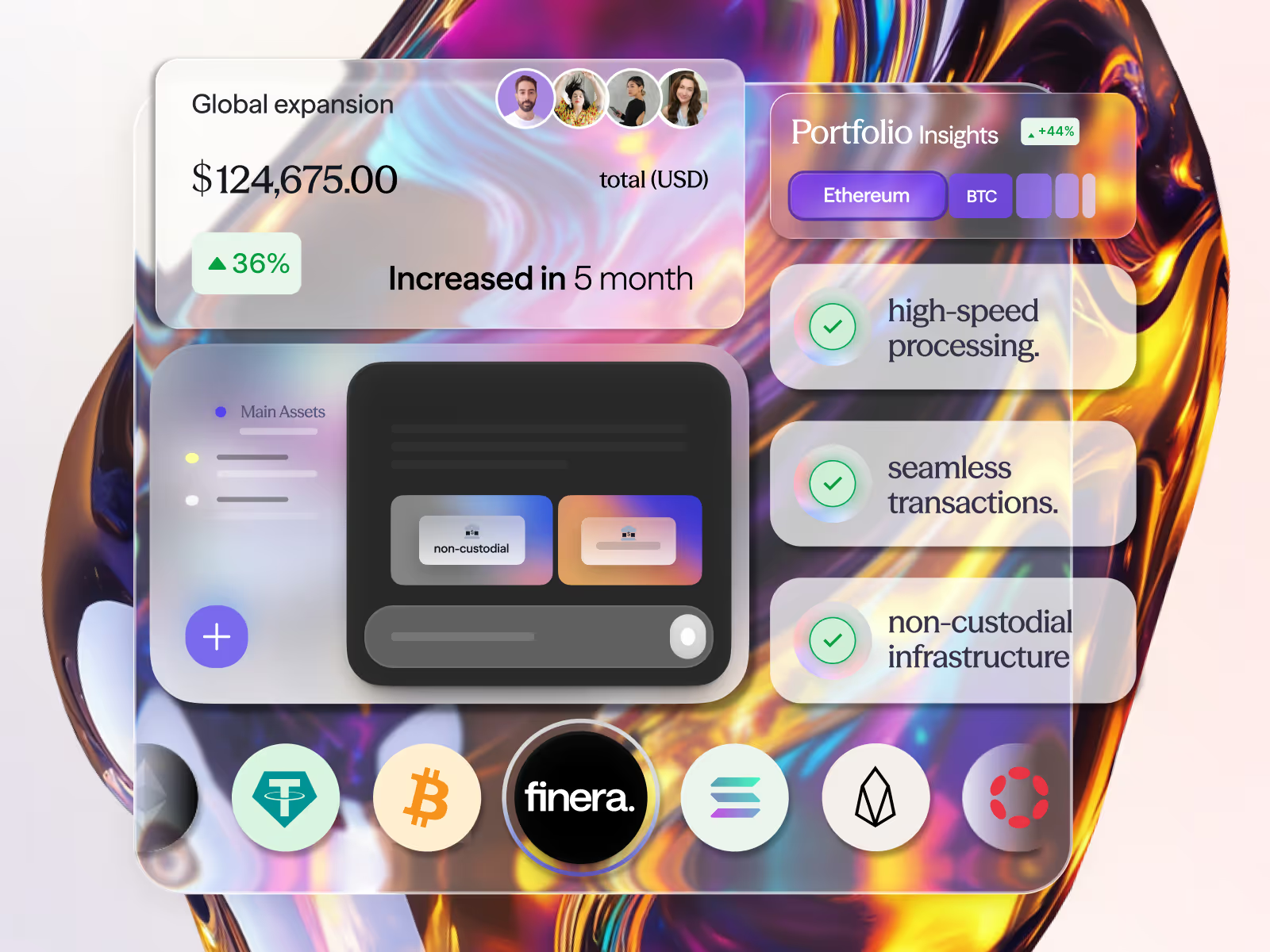
For merchants, crypto payment processing allows customers to pay using digital assets such as Bitcoin, Ethereum or stablecoins.
Adoption levels vary significantly by market and customer segment but interest in crypto payments has grown steadily in sectors such as online gaming, travel, digital services and global e-commerce.
One reason for this interest is the potential for borderless transactions. Because crypto payments operate independently of national banking systems, they can support transactions between users in different countries without relying on traditional cross-border card infrastructure.
Settlement speed is another factor. While processing times vary by blockchain network, some transactions can be confirmed relatively quickly compared with traditional banking settlement processes.
In practice, many businesses view crypto not as a replacement for cards but as an additional payment rail.
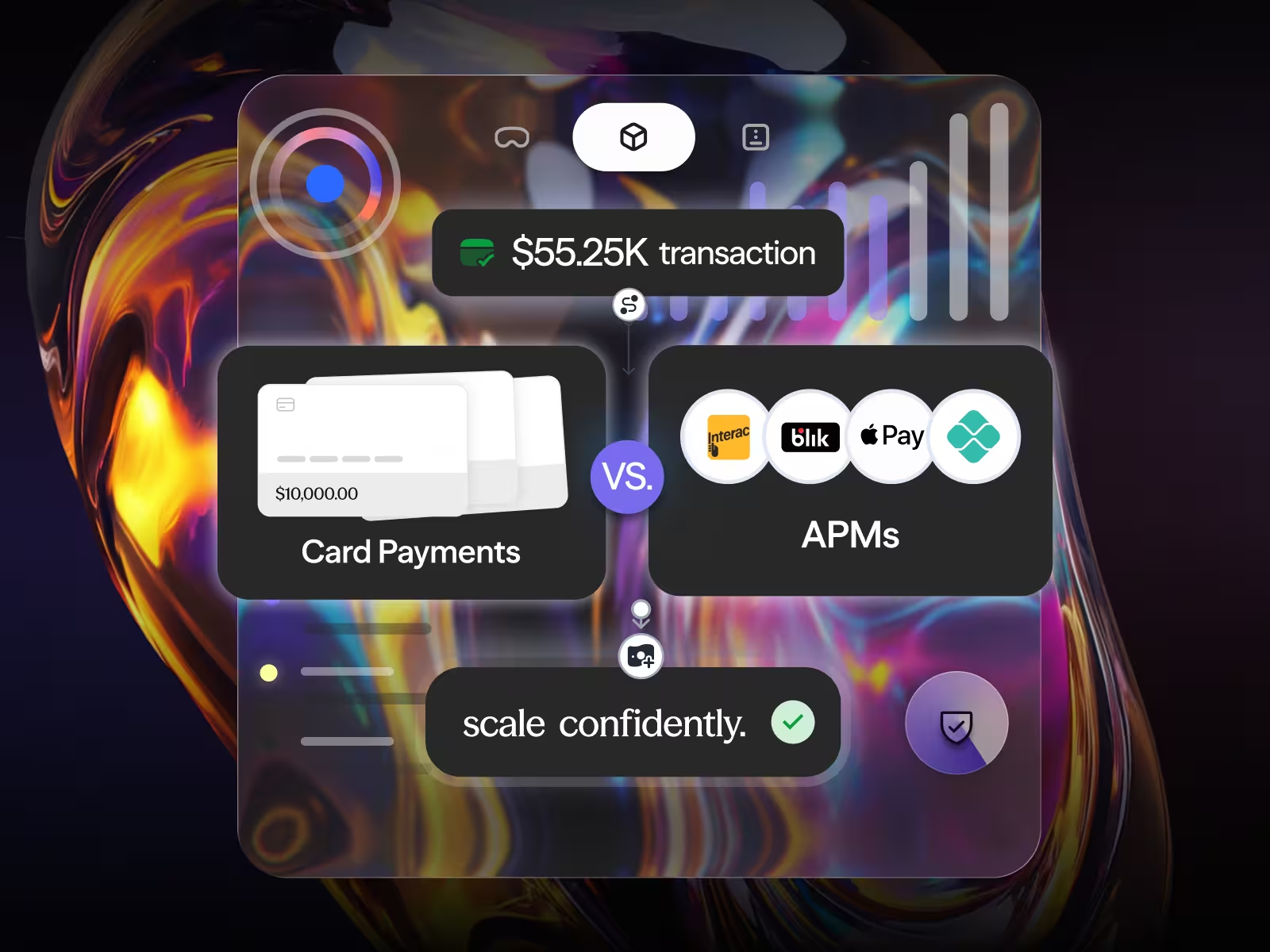
Comparing Crypto Payments and Card Payments
To understand where each option fits best, it helps to compare several important factors that influence payment performance.
Transaction Speed
Card payments often appear instant at checkout but settlement for merchants may take several days, depending on the payment processor and banking system.
Crypto transactions can settle faster in some cases, particularly when blockchain networks confirm transactions quickly. However, confirmation times vary depending on network conditions.
Cross-Border Accessibility
Cards work globally but often rely on banking relationships and local acquiring networks. This can introduce additional fees or approval challenges when transactions cross borders.
Crypto payments can facilitate cross-border transactions without relying on traditional banking infrastructure, which may simplify international payments in certain cases.
Payment Costs
Card payments involve multiple fees, including interchange, scheme fees and processing costs.
Crypto payments involve network transaction fees and payment processing costs, which may differ depending on the blockchain network used. Cost structures can vary widely, so merchants should evaluate these carefully.
Fraud and Chargebacks
Card networks include chargeback mechanisms designed to protect consumers. While this builds trust, it can also create operational costs and risks for merchants.
Crypto transactions are typically irreversible once confirmed on the blockchain. This removes chargeback risk but also requires strong operational controls to handle disputes and refunds.
Customer Adoption
Cards remain the most familiar payment method for many consumers. Crypto adoption continues to grow but still varies by region and customer segment.
For many merchants, the most effective approach is offering multiple payment methods that match customer expectations.
When Merchants Should Use Crypto Payments
Crypto payments are not relevant for every business. However, they can be particularly useful in certain scenarios.
Merchants serving international audiences may find crypto helpful for supporting cross-border transactions.
Businesses operating in digital-first industries, such as online gaming, digital services or global marketplaces, may also benefit from offering crypto payment options.
Crypto can also appeal to customers who prefer digital asset transactions or want an alternative to traditional banking systems.
That said, successful crypto adoption requires thoughtful implementation. Merchants should consider regulatory requirements, payment infrastructure compatibility and customer demand before adding crypto to their checkout.
The Role of Payment Orchestration Technology
Managing various payment methods is harder as payment ecosystems become more complex.
Payment orchestration technology plays a critical role.
Payment orchestration allows merchants to connect multiple payment providers, methods and processors through a unified infrastructure layer. This makes it easier to manage cards, alternative payment methods and crypto payments within one system.
Orchestration also enables merchants to optimise routing, monitor transaction performance and improve payment visibility across regions.
Instead of relying on a single payment provider, merchants can build flexible payment strategies that adapt to different markets and customer behaviours.
Building a Balanced Payment Infrastructure
The comparison between crypto payments vs traditional cards should not be framed as an either-or decision.
Cards remain essential for most online businesses due to their global acceptance and familiarity. At the same time, crypto payments can offer new opportunities for merchants operating in international and digital-first environments.
The most effective payment strategies usually combine multiple payment rails to support diverse customer preferences while maintaining operational control.
For merchants expanding globally, the goal is not to choose one payment method over another. It is to create a payment ecosystem that supports flexibility, resilience and growth.
At finera., we help businesses manage modern payment ecosystems through payment orchestration technology and a suite of payment solutions, including non-custodial crypto processing, card processing and alternative payment methods. Our infrastructure is designed to support merchants operating across markets while maintaining visibility and control.
If you are exploring how crypto payments can complement your existing payment strategy, contact our team to learn how finera. can help support your global payments infrastructure.
This article on payment methods is for informational and educational purposes only.
- Not Professional Advice: The content provided does not constitute financial, legal, tax, or professional advice. Always consult with a qualified professional before making financial decisions.
- No Liability: The authors, contributors, and the publisher assume no liability for any loss, damage, or consequence whatsoever, whether direct or indirect, resulting from your reliance on or use of the information contained herein.
- Third-Party Risk: The discussion of specific payment services, platforms, or institutions is for illustration only. We do not endorse or guarantee the performance, security, or policies of any third-party service mentioned. Use all third-party services at your own risk.
No Warranty: We make no warranty regarding the accuracy, completeness, or suitability of the information, which may become outdated over time.

Frequently Asked Questions

Still Have Questions?
Let’s Find the Right Solution for You
Stay Connected with Us!
Follow us on social media to stay up to date with the latest news, updates, and exclusive insights!