Trust at Scale: How Orchestration Ensures Uptime and Redundancy
Discover how payment orchestration supports uptime, redundancy and reliability at scale.
When it comes to scaling digital payments, trust is built on reliability. Customers typically expect instant, secure transactions, every time. Downtime can cost a business thousands in lost revenue and reputation.
That’s why more merchants are turning to payment orchestration to help support uptime and redundancy across their payment infrastructure. Instead of relying on a single provider, payment orchestration connects multiple gateways, processors and acquirers into one intelligent network, designed to deliver higher availability, smarter routing and consistent customer trust at scale.
Because reliability is not about luck but about building trust into every transaction.
Why Uptime and Redundancy Matter in Modern Payments
For merchants operating at scale, interruptions in payment processing can result in failed transactions. Redundancy, having multiple systems ready to handle the same task, is designed to help maintain the checkout experience smooth even when one provider falters.
The benefits of redundancy in payment systems go beyond risk management. It builds customer confidence, strengthens brand reputation and preserves the continuity of recurring revenue. In a hyper-competitive digital economy, reliability can significantly impact revenue.
Understanding Payment Orchestration and Its Role in Reliability
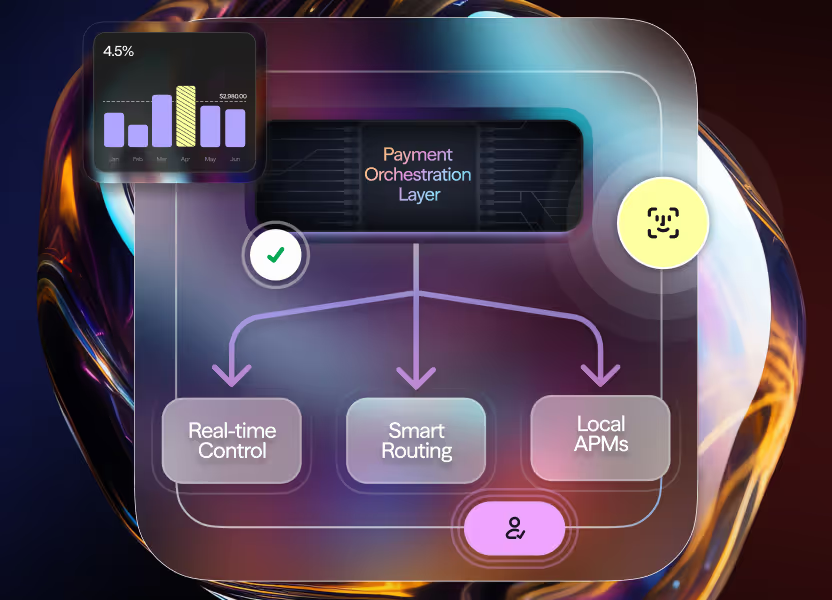
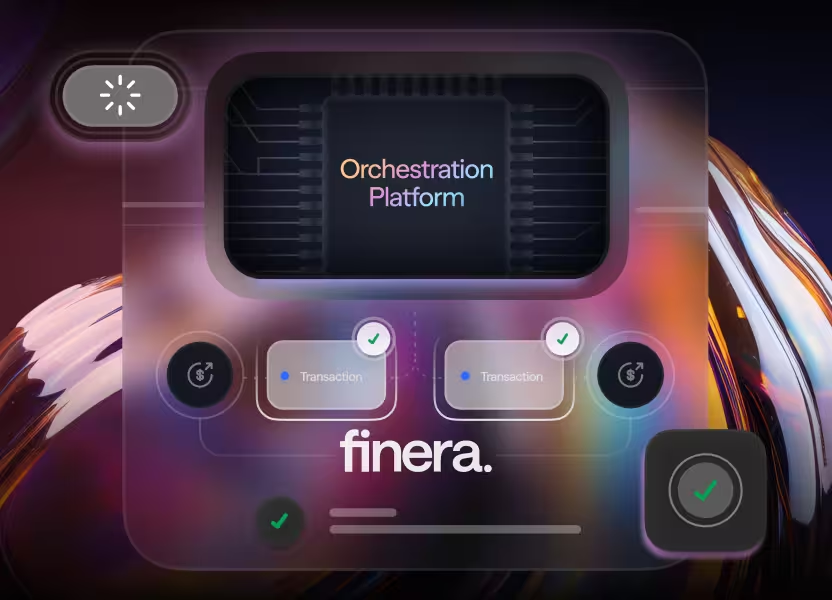
At its core, payment orchestration connects multiple payment service providers (PSPs), acquirers and gateways into a unified ecosystem. This orchestration layer dynamically routes each transaction through the most optimal and available provider in real time.
Unlike a traditional single-PSP setup, a payment orchestration platform offers built-in failover logic, retry mechanisms and automated routing. If one acquirer experiences downtime, transactions seamlessly reroute to another, which is designed to help maintainsystem reliability and customer trust.
How Payment Orchestration Improves Uptime and Reduces Downtime Risks
So, how does payment orchestration improve uptime?
Through intelligence and automation.
An orchestration engine continuously monitors transaction success rates, provider availability, and latency. When it detects performance drops, it automatically shifts traffic to the next best route. This is designed to support uninterrupted service and help prevent bottlenecks or outages from impacting customers.
In technical terms, it delivers:
- Smart failover routing.
- Real-time provider health checks.
- Load balancing across acquirers.
- Dynamic retry logic to recover failed authorisations.
The goal is to support improved uptime and higher approval rates.
Multi-Provider Payment Routing: The Engine of Redundancy
Multi-provider routing is where orchestration truly shines.
By connecting to several acquirers and payment processors simultaneously, merchants gain redundancy at every layer of the transaction journey.
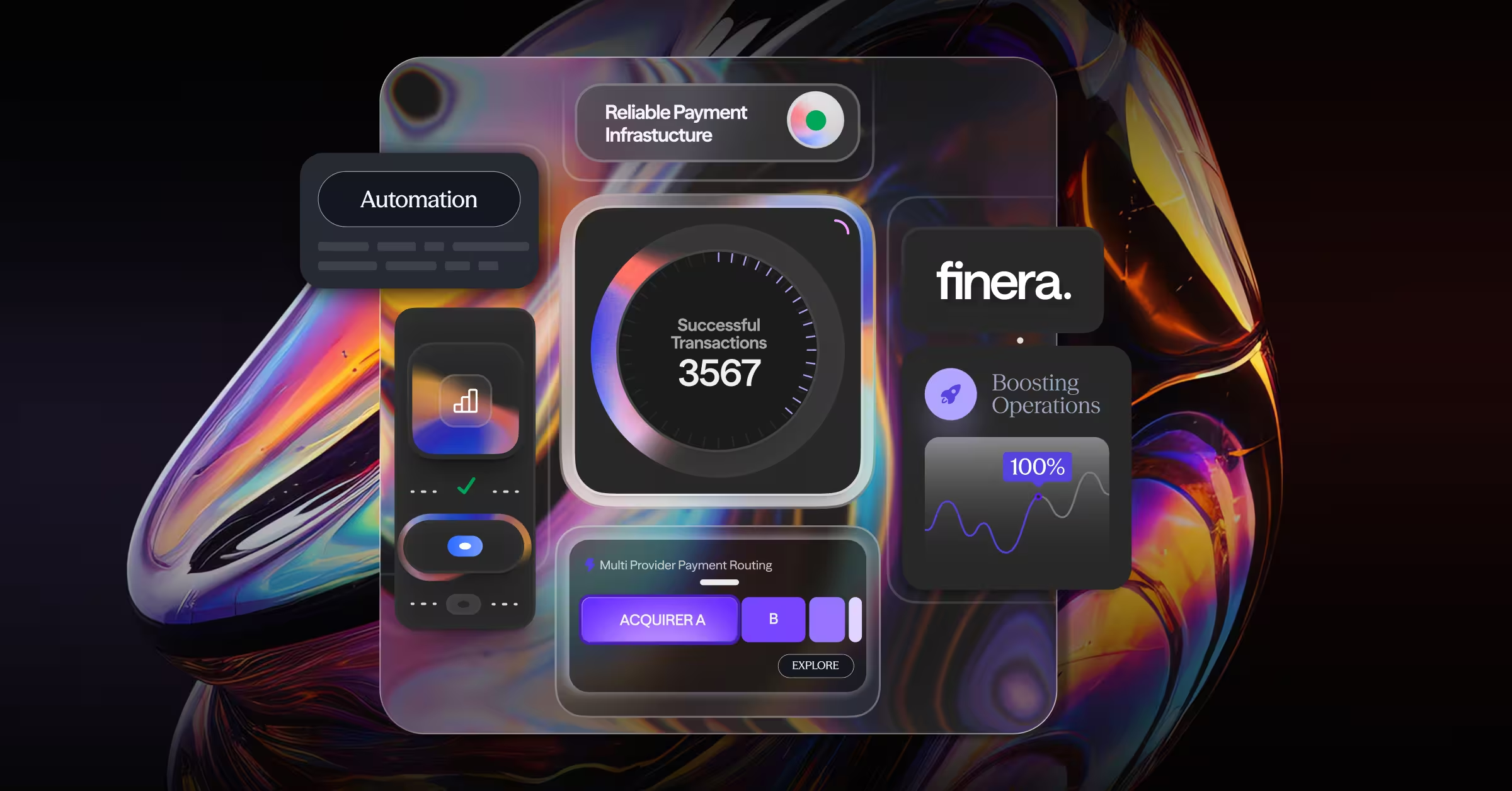
If Acquirer A goes offline, Acquirer B takes over instantly. No manual intervention. No downtime. No lost customers.
This multi-provider payment routing model not only improves resilience but also increases authorisation rates by letting merchants route transactions based on geography, issuer performance or currency. It’s uptime and optimisation rolled into one.

Designing for Orchestration Platform Reliability at Scale
True orchestration platform reliability is built on three pillars: Scalability, monitoring and automation.
- Scalability: Handle peak traffic (e.g., holiday sales or large game launches) without latency.
- Monitoring: Gain visibility into provider health, transaction success and failover performance.
- Automation: Let the orchestration layer make routing decisions in milliseconds, not minutes.
This architecture is designed to support high availability and reduce single points of failure, helping to enable payment infrastructures that aim to improve uptime.
The Business Benefits of Redundancy in Payment Systems
For merchants and platforms, the value of redundancy goes far beyond technical resilience. It directly impacts revenue stability, customer perception and operational efficiency. When your payment system can reroute traffic quickly,, it’s designed to help preserve transactions income. When your checkout is designed to staylive through peak loads or network failures, customers never notice the disruption, they simply complete their purchase and keep trusting your brand.
Redundancy also makes growth easier. Systems built for reliability are designed to scale more effectively, helping to reduce the fragility that can slow expansion or require constant firefighting. Teams spend less time managing outages and escalations and more time focused on optimisation and innovation.
In that sense, redundancy isn’t a backup plan at all but a long-term growth strategy disguised as infrastructure.
How to Ensure Payment Uptime Through Orchestration
Here’s how leading merchants ensure payment uptime through orchestration:
- Integrate multiple PSPs and acquirers for instant redundancy.
- Use smart routing rules to automatically detect and avoid failed paths.
- Monitor performance analytics to spot and solve issues before they escalate.
finera.’s orchestration technology is designed around these principles, aiming to make uptime and redundancy more accessible, scalable and measurable.
The Future of Reliable Payment Infrastructure
As AI-driven routing and predictive orchestration evolve, the future of payment reliability is proactive, not reactive. Systems may be able to help anticipate potential failures,with the goal of optimising not only uptime but also cost and conversion.
As AI-driven routing and predictive payment orchestration mature, reliability is shifting from a reactive safeguard to a proactive advantage. Future-ready systems are being designed not just respond to outages but help anticipate them, with the goal of rerouting transactions before failures occur.
This evolution matters across every vertical. In iGaming, improved uptime is designed to protect in-play bets and supporthigh-volume gaming transactions. For e-Commerce, redundancy is designed to help keep carts live through peak campaigns and flash sales. In retail, orchestration is designed to help in-store and online payment clear quickly, supporting unified customer journeys. And for travel and hospitality, where global payments span currencies and time zones, improved uptime means smootherbooking experiences and helps build trust with international travellers.
Across industries, the message is the same:
Reliability can help scale revenue. Merchants who treat trust, uptime and redundancy as strategic assets, not IT afterthoughts, may be better positioned in the envolving landscapeof digital commerce.
Building Trust at Scale with finera.
finera. helps global platforms simplify complexity and scale with confidence. Our suite of payment solutions, along with orchestration, gives you redundancy, reliability and smarter routing across every provider and region, all through a single connection.
Talk to our team today and to learn how we can help you work toward improved uptime and build trust at scale.
This article on payment methods is for informational and educational purposes only.
- Not Professional Advice: The content provided does not constitute financial, legal, tax, or professional advice. Always consult with a qualified professional before making financial decisions.
- No Liability: The authors, contributors, and the publisher assume no liability for any loss, damage, or consequence whatsoever, whether direct or indirect, resulting from your reliance on or use of the information contained herein.
- Third-Party Risk: The discussion of specific payment services, platforms, or institutions is for illustration only. We do not endorse or guarantee the performance, security, or policies of any third-party service mentioned. Use all third-party services at your own risk.
No Warranty: We make no warranty regarding the accuracy, completeness, or suitability of the information, which may become outdated over time.
.avif)
Frequently Asked Questions

Still Have Questions?
Let’s Find the Right Solution for You
Stay Connected with Us!
Follow us on social media to stay up to date with the latest news, updates, and exclusive insights!