
Recurring payment processing in 2026: why payments fail and how to recover them
See why recurring payments fail and how to recover them with smart retries and routing.
A customer who still wants your product is not always a customer who keeps paying for it. Somewhere in every subscription business, renewals fail quietly, when a saved card has expired, a balance has fallen short, or an issuer has simply said no. The customer never decided to leave, and often never noticed. The payment just did not go through.
In short: Recurring payment processing is the automated charging of a customer's saved card or account on a set schedule, also called automatic recurring billing. Payments fail mainly because stored cards go stale or funds fall short, and operators recover them by refreshing card credentials, retrying within card-scheme rules, and routing each attempt to the acquirer most likely to approve it.
That loss has a name, involuntary churn, and it is one of the most recoverable leaks in a subscription business. Recurring payment processing is the machinery that charges a saved card on a schedule, and when it fails the cause is usually structural, which means it can be fixed.
This guide covers why recurring payments fail at scale, and the three-layer recovery stack that gets them back: refreshing stored card credentials, retrying within the card-scheme rules, and routing each attempt to the acquirer most likely to approve it. It also covers where authentication rules apply, so recovery stays on the right side of them.
Key Takeaways
- Most failed recurring charges are involuntary churn: the customer did not cancel, the payment failed on its own.
- Stored cards go stale constantly, so a share of failure is built into any card-on-file programme.
- Recovery works in three layers: refresh the card credential, retry within the scheme rules, and route each attempt to a better-performing acquirer.
- The published Visa retry ceiling is contested. Visa's rules update on declined transaction resubmission sets it at 15 attempts in 30 days for recoverable categories; some current merchant guidance states 20. Treat 15 as the safe working ceiling and confirm yours with your acquirer.
- Mastercard does not publish a single cap. It signals per transaction through Merchant Advice Codes, and code 03 means stop.
- Strong Customer Authentication applies to the setup of a recurring agreement; the fixed charges that follow are exempt.
1. Recurring payment processing: what it is, and why it fails
Recurring processing and automatic recurring billing, in plain terms
Recurring payment processing is the system that charges a customer's stored card or bank details automatically, on an agreed schedule. It is also called automatic recurring billing, and it sits behind everything from a monthly software seat to an annual membership.
Two kinds of transaction sit inside any subscription. The first, when the customer is present and sets the agreement up, is customer-initiated. The charges that follow, taken by the merchant without the customer in the loop, are merchant-initiated. That distinction does real work: it decides which authentication rules apply, and we return to it at the end.
Why the charges fail: stale cards, not lost customers
Here is what typically happens in practice. A renewal falls due, the saved card is charged, and the issuer declines. The customer is not watching. They did not cancel. They may not find out until the service stops working. That is involuntary churn, and it is a different problem from a customer who weighs up the price and walks away.
It happens at scale for a plain reason: stored cards go stale. Cards expire, get reissued after loss or fraud, or change number, and the credential on file quietly stops matching the card in the customer's wallet. This is routine enough that both card networks run dedicated services to refresh stored credentials, and an expired card is a standard decline reason in their rulebooks. Some failure is therefore built into any card-on-file programme.
Not every decline is the same, though, and the difference decides what you can do next.
A hard decline is terminal, and no amount of retrying changes it. A soft decline is temporary, and that is where the recoverable money sits. Thin balances make the insufficient-funds case common, especially around the dates when many subscriptions bill at once. An expired card is a third case: recoverable, but only after the credential itself is brought up to date, which is where the first recovery layer starts.
2. The recovery stack: refresh, retry, route
Recovering a failed recurring payment takes three layers working together, each catching failures the others cannot.
Layer 1: keep credentials fresh before you charge
The cheapest failed payment is the one that never happens. Before a renewal is even attempted, the card on file can be brought up to date.
Account updater services do this. Visa's Account Updater and Mastercard's Automatic Billing Updater let a merchant, through its acquirer, receive a refreshed card number and expiry date when the issuer reissues a card. The stale credential is replaced before it can trigger a decline. Coverage is not universal: an updater only helps where the issuer participates, so treat it as a strong first line and not a complete fix. If a term here is new to your team, the account updater is worth understanding in its own right.
Network tokenisation goes a step further. Instead of storing the raw sixteen-digit card number, the card is replaced with a token that the issuer keeps mapped to the live account, so a reissued card keeps working with no new number entered. It also lifts acceptance: Visa reports a four percent uplift in authorisation and a 30 percent reduction in online fraud from tokenised transactions compared with the raw card number, though gains vary by implementation. On card-not-present payments, which is exactly where recurring billing lives, that is recovered revenue for a change nobody at checkout even sees.
Layer 2: retry intelligently, within the rules
When a charge does fail, the instinct is to try again. The skill is trying again the right number of times, at the right moment, and only on a card that can still approve.
Start by reading the decline. A soft decline can be retried; a hard decline cannot, and retrying it wastes acquirer goodwill and risks scheme monitoring. Visa groups its decline codes into categories that tell you whether a reattempt is permitted at all, and one code deserves singling out: Response Code 14, invalid account number, must never be reattempted using the same account number.
Then read the issuer's advice. On a declined recurring charge, Mastercard issuers return a Merchant Advice Code, a short instruction telling the merchant what to do next. A value of 03 means do not try again: stop, update the credential or contact the customer, and do not burn attempts. Codes in the 24 to 30 range carry the opposite signal, a defined wait before the next attempt, ranging from about an hour to a couple of days depending on the code. Visa publishes no equivalent code set, so on Visa traffic the decline category is the signal you have.
That difference is worth building into your retry logic directly. Ask your acquirer or gateway for the current Merchant Advice Code mapping, then schedule the next attempt off the code the issuer actually returned instead of a fixed interval of your own choosing.
Know your ceiling, and know that it is contested. Visa's published rules update on declined transaction resubmission sets the limit at up to 15 reattempts in 30 days for recoverable decline categories, and that is the figure most processor guidance and gateway enforcement still work to. Some current merchant guidance puts the same figure at 20. The gap costs money in one direction only, because the fee applies to every attempt past the ceiling, so a policy built on the higher number pays for the difference if the lower one turns out to apply. Until your acquirer confirms which ceiling governs your setup, 15 is the safe number to work to.
One counting subtlety matters here. Visa evaluates reattempts against the same payment credential, and a network token and the underlying card number count as separate credentials, so attempts on each are tallied independently. If you are tokenised, your effective position is not what a raw attempt count suggests.
Whatever the ceiling turns out to be, reaching it is not a strategy, and altering the request to slip past the rules is itself a breach. A short sequence of well-timed retries, paired with a dunning sequence, tends to recover more than a blind daily attempt: a reminder before the card is due to expire, a clear message when a charge fails asking the customer to check their card, and an escalation before the service is switched off.
Layer 3: route smart when an acquirer keeps failing
Some failures have nothing to do with the card. An acquirer can underperform for a given card type or issuing market, or simply have a bad hour. Sending every retry down the same path just repeats the result.
Smart routing sends each attempt to the acquirer most likely to approve it, based on the card, the issuing market, and live performance. A retry that failed through one acquirer can succeed through another that presents a different profile to the issuer.
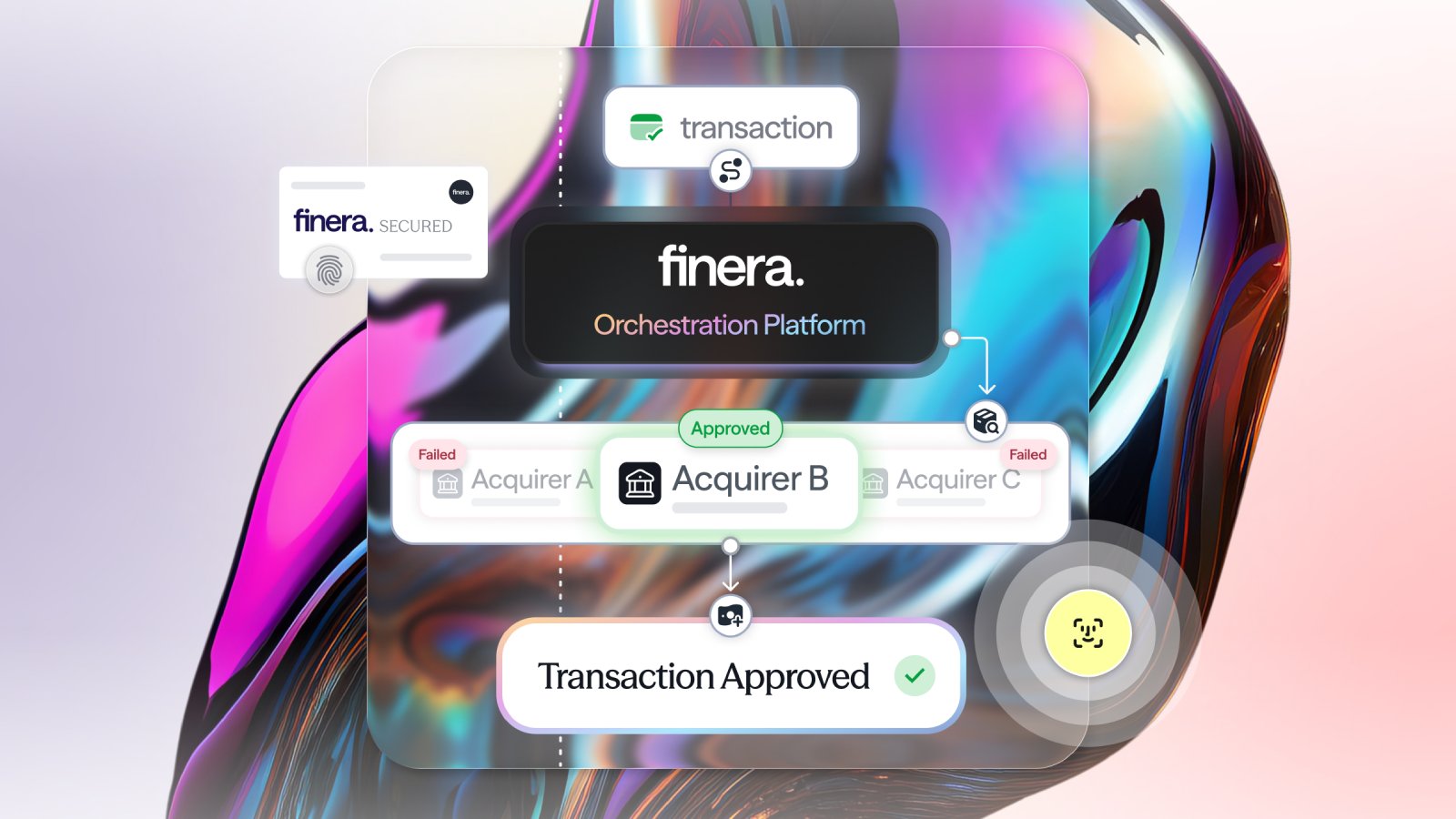
This is where the layers come together. A payment orchestration platform can cordinate recovery from a single integration, retrying within the scheme rules, routing each attempt across acquirers, and applying network tokenisation, while connecting to the account-updater services the schemes run. finera. Is a payment orchestration service designed to bring that coordination into one place: smart routing, rules-aware retries and tokenisation, working alongside the scheme updater services it does not replace.
3. Recovering without breaking the rules: SCA and recurring payments
Every recovery tactic meets the same worry: does re-charging or re-authenticating a customer trip Strong Customer Authentication? For recurring payments, the answer is more workable than many operators assume.
Who initiates the payment, and why it changes the rules
Strong Customer Authentication applies to payments the customer initiates. In the EU it has applied under PSD2 since 14 September 2019; the UK now runs its own onshored rules, the Payment Services Regulations 2017 and the retained UK technical standards, and the FCA set 14 March 2022 as the point by which it expected full compliance for e-commerce. A recurring series is treated in two parts. Setting the agreement up needs authentication: under the technical standards, SCA applies when a payer 'creates, amends, or initiates for the first time, a series of recurring transactions with the same amount and with the same payee'. The fixed charges that follow are exempt, and genuine merchant-initiated transactions, taken under that mandate with the customer absent, sit outside SCA altogether.
That is why the customer-initiated versus merchant-initiated line matters in practice.
Authenticate the setup properly, flag the later charges correctly as merchant-initiated, and your recovery retries are not blocked by an authentication step the rules never asked for. Getting the mandate and the flagging right is worth confirming with your acquirer, and with qualified counsel where a specific case is unclear.
What This Means for Merchants and Operators in 2026
Two shifts make recovery easier to get right in 2026. Network tokenisation has moved from edge case to norm: more than 30% of Mastercard transactions worldwide are now tokenised, with a commitment to full European e-commerce tokenisation by 2030. As more stored credentials sit behind tokens that survive reissuance, the commonest cause of recurring failure keeps shrinking. The rulebook is moving too: the proposed PSD3 and Payment Services Regulation would clarify when merchant-initiated transactions are exempt from authentication, firming up the ground under the recovery flows above.
The real change is quieter. Recovery has become a standard capability, which means the cost of not running it climbs every year. A subscription business that still treats failed renewals as a monthly surprise is handing its competitors revenue they collect as a matter of routine.
Start with the declines you already have
The size of the problem is sitting in data you already hold. Pull last quarter's failed renewals and split them by decline code. Everything in the hard column is gone. Everything in the soft and data columns is the recoverable pool, and for most subscription businesses that number lands higher than expected. It also tells you which layer to build first: a pile of expired-card declines points at credentials, a pile of do-not-honour points at routing.
finera. Is a payment orchestration service that can help coordinate recovery across acquirers from one integration once you know which layer you need.

Frequently Asked Questions
It is the automated charging of a customer's saved card or account on a set schedule, also called automatic recurring billing. It covers subscriptions, memberships, instalments and any other repeating charge taken from a stored credential.
Most failures come from stored cards going stale, expired, reissued or renumbered, or from a temporary issue such as insufficient funds or an issuer being briefly unavailable. A smaller share are hard declines, such as a closed or stolen card, which cannot be recovered at all.
Involuntary churn is a customer lost to a failed payment, not to a decision to cancel. It matters because, unlike a customer who actively leaves, much of it is recoverable through better payment handling.
Published guidance disagrees on the Visa figure. Visa's rules update on declined transaction resubmission sets the ceiling at 15 attempts in 30 days for recoverable decline categories, while some current merchant guidance states 20, so it is worth confirming which applies to your setup with your acquirer and working to 15 in the meantime. Mastercard does not publish a single cap and signals per transaction through Merchant Advice Codes instead. A hard decline should never be retried, and in practice a few well-timed attempts recover most of what is recoverable.
It is a short instruction Mastercard issuers return alongside a decline, telling the merchant what to do next. Code 03 means do not try again; codes in the 24 to 30 range indicate a defined wait before the next attempt. Visa does not publish an equivalent set, so on Visa traffic the decline category is the signal to work from.
An account updater refreshes a stored card credential, its number and expiry, when the issuer reissues the card, so the charge is attempted against current details. It does not stop every failure, and coverage depends on the issuer participating, but it removes one of the most common causes before a charge is ever sent.
The setup of a recurring agreement generally needs authentication, but the fixed charges that follow are exempt, and true merchant-initiated transactions sit outside SCA. Getting the initial mandate and the transaction flagging right is what keeps later charges from being challenged, and specific cases are worth confirming with qualified counsel.
Orchestration runs rules-aware retries and smart routing from a single integration, and connects to the scheme services that refresh credentials. That lets a failed charge be retried, rerouted and re-presented against a fresh credential as one coordinated flow instead of three disconnected ones.

Still Have Questions?
Let’s Find the Right Solution for You
Stay Connected with Us!
Follow us on social media to stay up to date with the latest news, updates, and exclusive insights!


