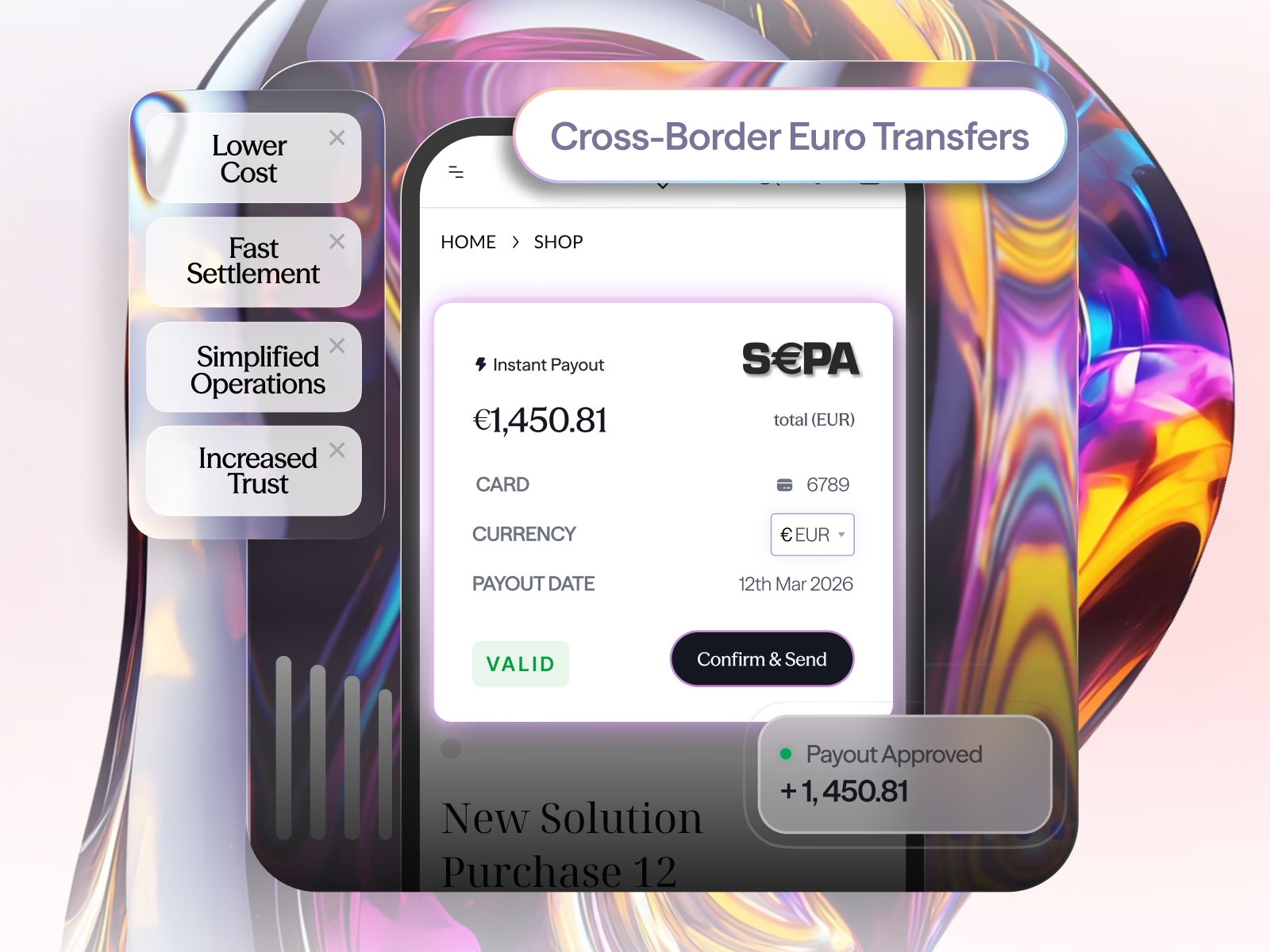
Payouts in 2026: What Businesses Need to Know
How payouts work, where they’re used, and what businesses consider when offering faster payouts.

Payouts are a significant consideration for businesses operating in digital commerce. As payment expectations evolve,some merchants across ecommerce, online gaming, digital services and platform-based models are re-evaluating how and when funds move to end users, partners and affiliates.
In 2026, payouts are expected to be increasingly viewed as more than a technical feature. They are part of a broader discussion around payout speed, transparency and operational efficiency. While adoption varies by market and use case, understanding how payouts can work, where they are applied and what they realistically offer can be valuable for businesses operating at scale.
What Are Payouts?
Payouts generally refer to the ability to transfer funds to a recipient on accelerated timelines, rather than relying on traditional settlement cycles that may take one or more business days. These payouts are typically initiated once a transaction has been approved and processed, subject to the rules of the payment method, banking rails and compliance requirements involved.
How Payouts Work in Practice
Payouts utilise modern payment rails and integrations that facilitate faster fund movement compared to traditional settlement cycles. Card-based push payments, such as Original Credit Transaction (OCT), allow funds to be sent directly to a recipient’s debit or credit card. OCT is an example of a card-based payout method and operates over existing card networks, providing a broadly accessible approach for businesses distributing funds across multiple regions.
From an operational perspective, the payout flow typically involves sequential steps. These may include transaction approval and validation, eligibility checks based on factors such as method, amount, and region, initiation of the payout via a supported rail, and confirmation of the payout status once processing is completed.
Consideration Around Faster Payouts
Interest in faster payouts may be related to changing user expectations. Some end users, affiliates, creators and merchants increasingly seek more timely access to funds, particularly in industries where liquidity and cash flow matter.
Faster payouts may support:
- Improved transparency around fund availability.
- More predictable cash-flow management.
- Reduced dependency on manual payout processes.
At the same time, faster payouts require careful consideration of reconciliation, fraud controls and operational oversight. Speed is an important consideration, alongside other factors, in decision-making.
Payouts in Ecommerce
In ecommerce, payouts are often relevant for marketplaces, platforms and merchants operating with third-party sellers. Rather than relying only on traditional settlement windows, some platforms enable faster access to funds once transactions have been completed and validated.
Use cases in ecommerce include:
- Marketplace seller payouts.
- Affiliate commissions.
- Refund processing.
- Digital goods delivery models.
While faster payouts can support seller satisfaction and operational efficiency, they are typically applied selectively. Factors such as transaction history, volume and payment method are used to determine eligibility.
Payouts in iGaming and Digital Services
In online gaming and other digital service industries, payouts are frequently discussed in the context of user withdrawals where players and users often expect timely access to funds.
However, payout speed is usually balanced against verification processes, regulatory requirements and responsible gaming controls. As a result, payouts may be offered under specific conditions rather than universally.
Payment Orchestration and Faster Payouts
Payment orchestration can play an important role in how businesses manage payout complexity. By acting as an intermediary layer, orchestration may help route payouts through the most appropriate rails based on geography, method availability and operational rules.
In the context of instant payouts, orchestration may support integration with multiple providers and consistency in payout logic.
While orchestration does not eliminate all operational challenges, it may help businesses scale payout operations more efficiently across markets.
What Businesses Should Consider for 2026
As technologies supporting faster payouts continue to evolve, businesses assessing their payout strategies may want to consider:
- Where faster payouts may provide meaningful value for users.
- How payout speed aligns with risk, compliance and operational controls.
- Whether orchestration can support scalability and oversight.
Instant payouts are becoming an important part of modern merchant payout solutions in selected use cases.
Looking Ahead
In 2026, real-time payouts are expected to be an important part of the broader shift toward more flexible and transparent payment operations. While expectations around speed may evolve, successful implementation depends on infrastructure, regulation and responsible design.
Businesses that approach payouts with a balanced, market-specific strategy may be to align payout speed with operational stability.
Curious about how faster payouts, payment orchestration and modern payout strategies could fit into your business model?
Talk to our team to explore how finera.’s technology supports scalable, flexible payment solutions across markets.
This article on payment methods is for informational and educational purposes only.
- Not Professional Advice: The content provided does not constitute financial, legal, tax, or professional advice. Always consult with a qualified professional before making financial decisions.
- No Liability: The authors, contributors, and the publisher assume no liability for any loss, damage, or consequence whatsoever, whether direct or indirect, resulting from your reliance on or use of the information contained herein.
- Third-Party Risk: The discussion of specific payment services, platforms, or institutions is for illustration only. We do not endorse or guarantee the performance, security, or policies of any third-party service mentioned. Use all third-party services at your own risk.
- No Warranty: We make no warranty regarding the accuracy, completeness, or suitability of the information, which may become outdated over time.

Frequently Asked Questions

Still Have Questions?
Let’s Find the Right Solution for You
Stay Connected with Us!
Follow us on social media to stay up to date with the latest news, updates, and exclusive insights!