How Payment Orchestration Powers iGaming Growth
How iGaming operators use payment orchestration platforms to improve approvals, compliance and player.

The iGaming industry operates under some of the most demanding payment conditions in global digital commerce. Every transaction sits at the intersection of strict regulation, issuer scrutiny, fraud risk and player experience expectations. For iGaming operators, payments are not just a support function. They are a core growth lever.
As iGaming expands across regulated jurisdictions, operators face fragmented acquiring landscapes, local payment method requirements, fluctuating issuer behaviour and rising compliance costs. Traditional single PSP setups struggle to keep pace. This is where payment orchestration becomes essential.
A modern payment orchestration platform enables iGaming businesses to centralise, control and optimise payment flows across multiple PSPs, acquirers and payment methods, without rebuilding infrastructure for every market shift. In iGaming, where approval rates directly affect player lifetime value, orchestration can no longer be optional.
Key takeaways
- iGaming payments require dynamic routing, not static integrations
- Payment orchestration platforms improve approval rates under issuer pressure
- Regulatory complexity in iGaming demands centralised payment logic
- Deposits and withdrawals benefit from real-time orchestration decisions
- Scalable iGaming growth depends on a flexible payment infrastructure

Why iGaming Payments Break Traditional Payment Setups
iGaming payment environments differ fundamentally from standard eCommerce. Issuers treat iGaming transactions with heightened risk sensitivity, even in fully regulated markets. As a result, approval rates can vary widely based on geography, transaction timing, PSP configuration and player behaviour.
In iGaming, a single PSP is rarely sufficient. Operators must support cards, local bank transfers, wallets, instant payments and alternative methods, all while adapting to jurisdiction-specific rules. Without payment orchestration, each integration may add operational overhead and limit agility.
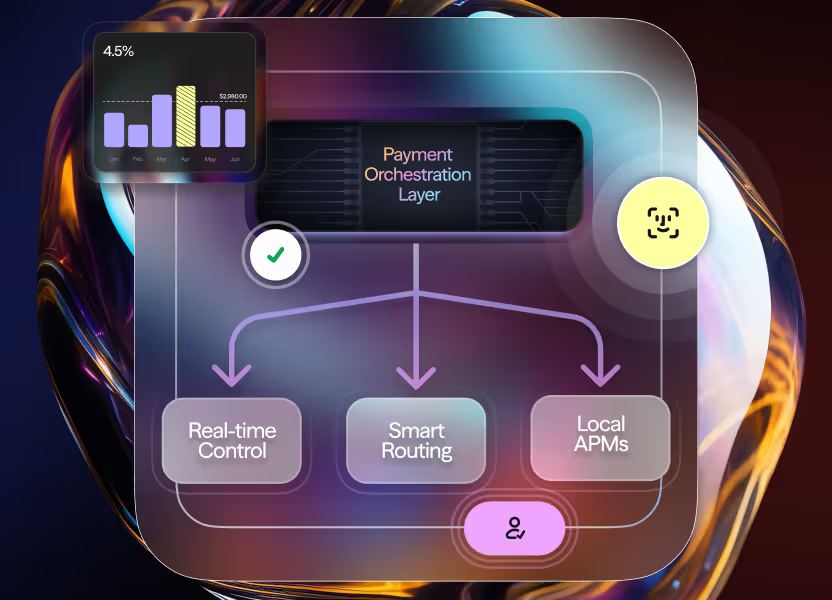
Payment orchestration gives iGaming operators a control layer above PSPs, allowing them to adapt in real time rather than react after failures occur.
Payment Orchestration in iGaming: A Strategic Infrastructure Layer
At its core, payment orchestration is the ability to manage multiple payment providers through a single unified platform. For iGaming operators, this means abstracting complexity away from game platforms and player interfaces.
A payment orchestration platform helps handle routing logic, failover rules, tokenisation, retries and compliance workflows centrally. Instead of hard-coding payment paths, iGaming teams aim to define strategies that respond dynamically to issuer behaviour and transaction outcomes.
This orchestration layer becomes especially powerful in iGaming, where transaction patterns change rapidly based on promotions, live events and player activity spikes.
iGaming Regulation Push to Make Orchestration Non-Negotiable
Regulation is a defining feature of iGaming. Licensing frameworks differ by country and payment rules often change faster than product roadmaps. Some markets require local acquiring, others mandate specific payment methods and many impose strict reporting requirements.
Payment orchestration allows iGaming operators to adapt without re-archiving their stack. New PSPs or acquirers can be added through configuration rather than development cycles. Compliance logic can be enforced consistently across all payment flows.
In regulated iGaming environments, orchestration reduces operational risk by ensuring that payment behaviour aligns with local rules at all times.
How Payment Orchestration Improves iGaming Approval Rates
Issuer pressure is a constant challenge in iGaming. Even compliant transactions can be declined due to issuer risk models. Payment orchestration helps mitigate this by enabling intelligent routing decisions.
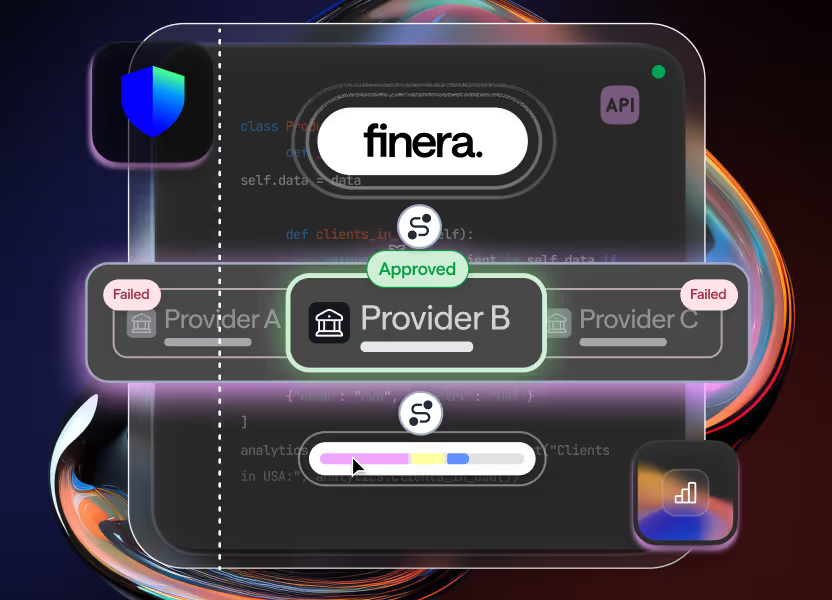
A payment orchestration platform can route transactions based on issuer response patterns, card geography, transaction size or historical performance. If one route underperforms, traffic can be shifted automatically to higher-performing paths.
For iGaming operators, this directly impacts revenue. Higher approval rates mean more successful deposits, higher engagement and improved player retention.
Sample iGaming Deposit Flow Using Payment Orchestration
Example deposit workflow for a regulated iGaming operator
When a player initiates a deposit, the payment orchestration platform evaluates multiple variables in real time. These include player location, preferred payment method, issuer region and current PSP performance.
The transaction is routed through the optimal PSP and acquirer combination for that specific context. If the initial attempt fails, the orchestration layer can retry via an alternative route without requiring player intervention.
Throughout the process, compliance checks, fraud signals and regulatory requirements are enforced centrally. For iGaming operators using finera., this workflow is configurable and auditable.
This approach aims to ensure that iGaming deposits remain seamless for players while maintaining operational control behind the scenes.
iGaming Withdrawals and the Role of Orchestration
Withdrawals are just as critical as deposits in iGaming. Delays or failures negatively impact player trust and regulatory standing. Payment orchestration enables consistent withdrawal experiences across markets.
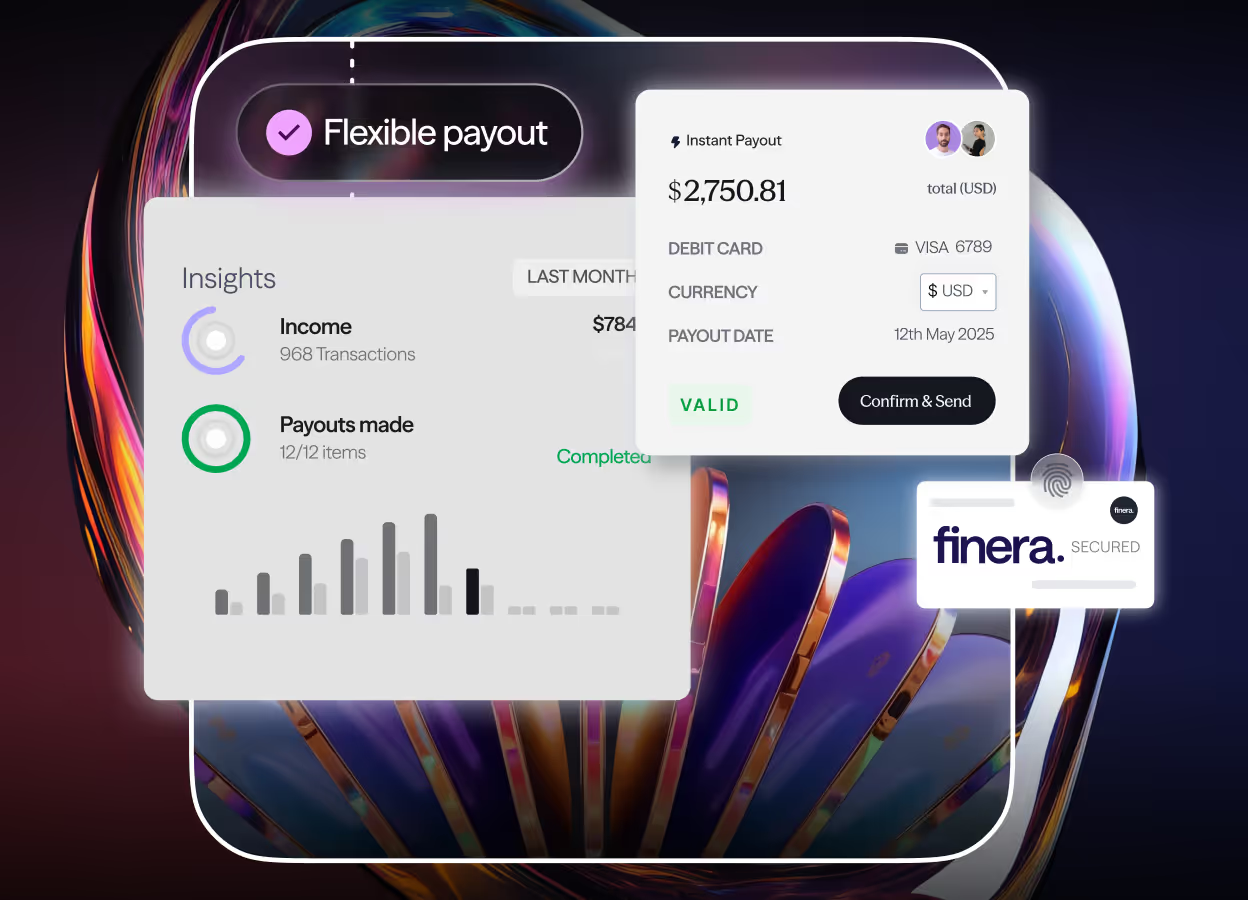
By centralising payout logic, iGaming operators can route withdrawals through reliable channels, manage settlement timelines and adapt to local payout preferences. This reduces manual intervention and improves transparency.
A payment orchestration platform also simplifies reconciliation by consolidating reporting across all PSPs and payout methods.
What to Look for in an iGaming Payment Orchestration Platform
Choosing the right payment orchestration platform is a strategic decision for iGaming operators. Not all orchestration solutions are built for regulated, high-risk environments.
Key capabilities to prioritise include:
- Multi-PSP and multi-acquirer connectivity with rapid onboarding
- Real-time routing and failover logic tailored to iGaming use cases
- Support for local and alternative payment methods across iGaming markets
- Centralised compliance, monitoring and reporting tools
- Scalable architecture that supports peak iGaming traffic
For iGaming businesses, a payment orchestration platform should be designed for constant change rather than static flows.
Why iGaming Growth Depends on Payment Flexibility
Market expansion is a core growth driver in iGaming. However, entering new jurisdictions often introduces new payment challenges. Without payment orchestration, each expansion can increase technical debt.
Payment orchestration helps iGaming operators to launch in new markets faster by reusing existing infrastructure while adjusting routing and compliance rules as needed. This flexibility reduces time to market and lowers operational risk.
As competition intensifies, iGaming operators that can adapt their payment strategy can quickly gain a measurable advantage.
Payment Orchestration as a Revenue Optimisation Tool in iGaming
Beyond reliability, payment orchestration plays a direct role in revenue optimisation. By analysing transaction data across providers, iGaming operators can continuously refine routing strategies.
A payment orchestration platform enables experimentation with the least disruption. Operators can test new PSPs, adjust routing weights and optimise cost structures while maintaining a consistent player experience.
In iGaming, where margins are influenced by payment success rates, orchestration becomes a strategic revenue lever.
The Future of iGaming Payments Is Orchestrated
As iGaming regulation tightens and issuer scrutiny increases, static payment setups will continue to underperform. The future belongs to operators who treat payments as a dynamic system rather than a fixed integration.
Payment orchestration aims to provide the flexibility, resilience and intelligence required to operate successfully in regulated iGaming markets. Platforms like finera. are built to support this reality by giving operators control over their payment ecosystem.
For iGaming businesses focused on long-term scalability, payment orchestration is no longer an enhancement. It is foundational infrastructure.
This article on payment methods is for informational and educational purposes only.
- Not Professional Advice: The content provided does not constitute financial, legal, tax, or professional advice. Always consult with a qualified professional before making financial decisions.
- No Liability: The authors, contributors, and the publisher assume no liability for any loss, damage, or consequence whatsoever, whether direct or indirect, resulting from your reliance on or use of the information contained herein.
- Third-Party Risk: The discussion of specific payment services, platforms, or institutions is for illustration only. We do not endorse or guarantee the performance, security, or policies of any third-party service mentioned. Use all third-party services at your own risk.
- No Warranty: We make no warranty regarding the accuracy, completeness, or suitability of the information, which may become outdated over time.

Frequently Asked Questions
iGaming payments face higher issuer scrutiny, stricter regulation and greater fraud sensitivity, requiring more advanced routing and compliance controls.
Payment orchestration centralises compliance logic, ensuring that payment flows automatically align with jurisdiction-specific regulatory requirements.
Yes. Higher approval rates, faster deposits and smoother withdrawals all contribute to better player satisfaction in iGaming.
Payment orchestration platforms are scalable and can support both growing and enterprise-level iGaming operations.
finera. provides a configurable payment orchestration platform designed to handle regulated iGaming environments, issuer pressure, and global expansion.

Still Have Questions?
Let’s Find the Right Solution for You
Stay Connected with Us!
Follow us on social media to stay up to date with the latest news, updates, and exclusive insights!