How Payment Orchestration Enhances Security and Fraud Prevention
Learn how payment orchestration improves security, reduces fraud exposure and strengthens payments.
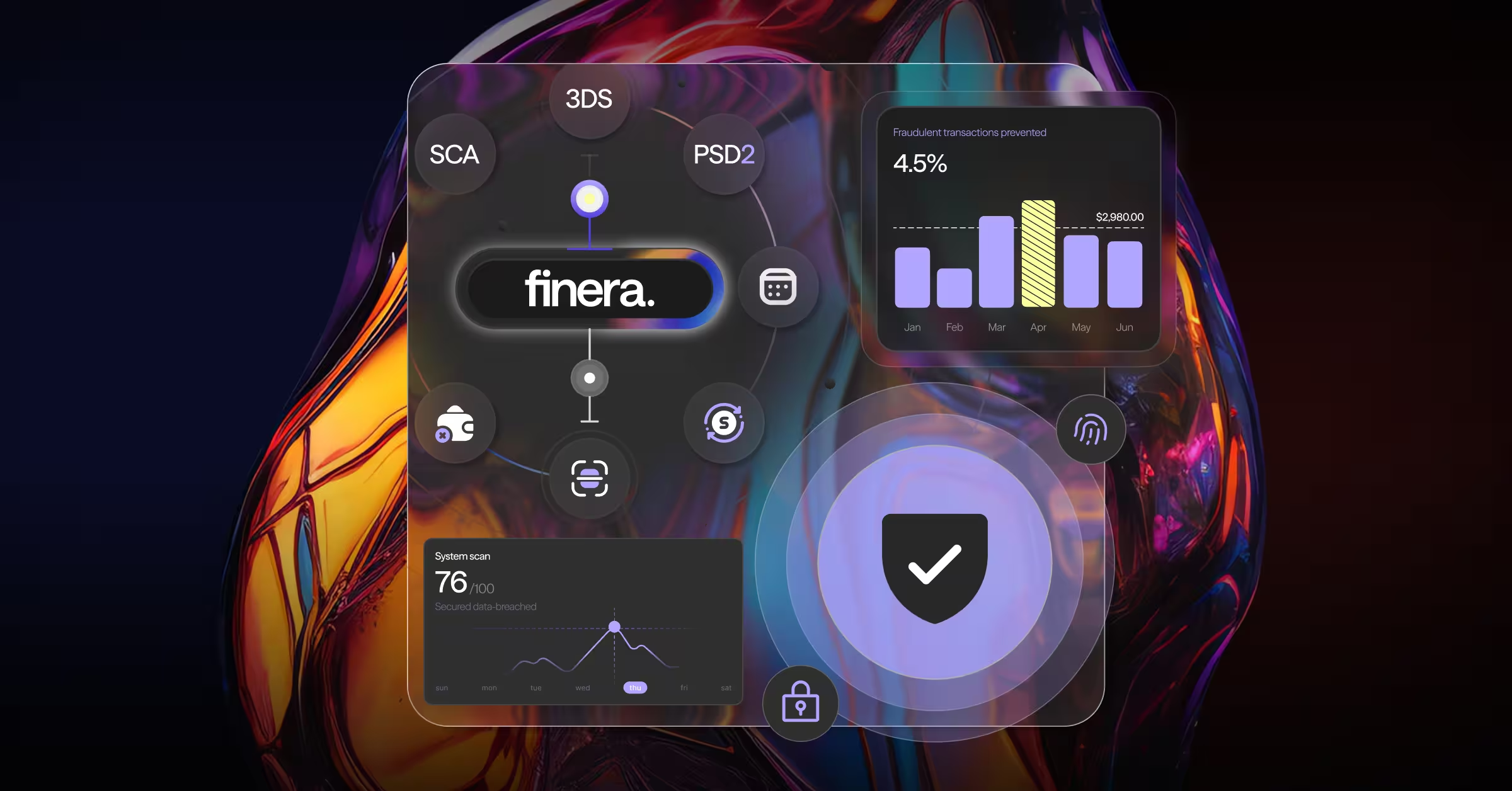
The continued growth of digital commerce has created new opportunities for businesses but it has also introduced more complex security considerations. As payment methods expand, transaction volumes increase and customer behaviour shifts, businesses must navigate evolving risk environments and a broader range of fraud scenarios.
Payment orchestration has gained attention as an approach that can help businesses manage these challenges more effectively. While orchestration is often associated with optimisation and multi-provider connectivity, it also plays a meaningful role in helping organisations structure their security processes and fraud management strategies.
This article provides an overview of how payment orchestration can contribute to stronger security practices and more coordinated fraud prevention, based on commonly adopted industry frameworks.
The Changing Fraud Landscape
Fraud in digital payments continues to evolve as new technologies and new payment behaviours emerge. Businesses today may encounter challenges such as card testing, account misuse, social engineering, and misuse of alternative payment methods. These issues can be more difficult to manage when payments are spread across multiple providers and systems.
Several trends contribute to this complexity:
Rising digital volumes
More online activity, in e-commerce, digital services, online gaming, mobility, subscriptions and mobile applications, creates more opportunities for attempted fraud.
Diversified payment methods
The introduction of alternative payment methods, digital wallets, real-time bank transfers, QR-code systems and region-specific solutions increases the number of risk models organisations must understand.
Cross-border transactions
Businesses operating in multiple regions must adjust to different risk profiles, regulatory expectations and consumer authentication norms.
Multiple devices and touchpoints
Payments today occur on mobile devices, websites, apps, QR codes and embedded interfaces, each requiring consistent and secure handling.
Against this backdrop, many organisations adopt payment orchestration as a way to bring structure and centralisation to fragmented systems.
What Is Payment Orchestration?
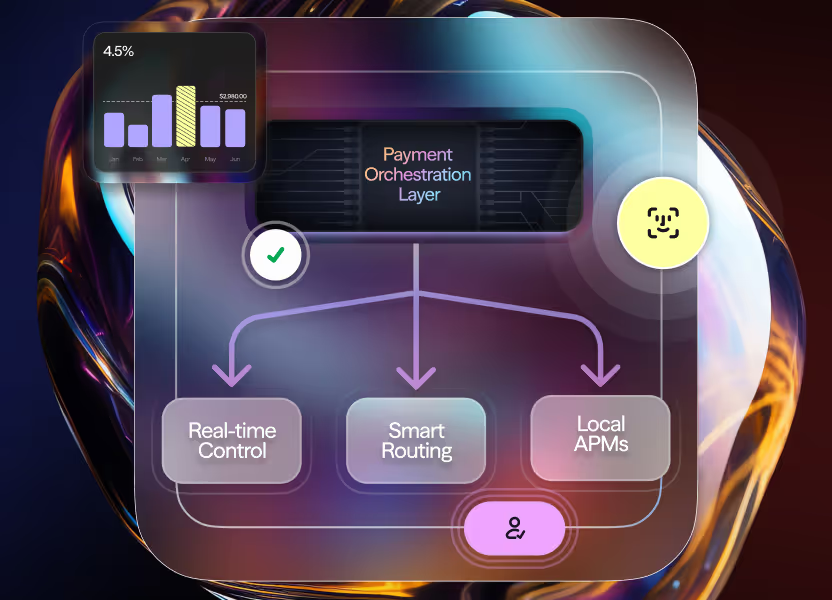
Payment orchestration refers to a technology layer that allows businesses to connect, manage and configure multiple payment providers, payment methods, and fraud tools from a single interface.
This layer standardises workflows across providers and simplifies how businesses apply fraud checks, routing rules, reporting structures and compliance requirements. From a security perspective, one of the primary benefits is centralisation: orchestration can help unify processes that might otherwise be spread across different platforms.
How Orchestration Strengthens Security and Fraud Prevention
As fraud techniques evolve and new payment flows emerge, businesses are increasingly looking for structured ways to manage authentication, routing and risk logic.
Payment orchestration has become part of this shift. It helps create a centralised foundation where security-related processes can be coordinated more effectively, especially in complex payment environments.
Why Orchestration Is Important for Modern Businesses
While orchestration is not a replacement for fraud prevention tools or internal risk teams, it can serve as an important structural layer that brings uniformity and visibility to increasingly complex payment environments.
The combination of unified data, smart routing, tokenisation and fraud management makes orchestration an essential technology layer for businesses facing rising fraud complexity. It enables payment teams to move from reactive fraud handling to a more proactive and structured approach to risk management.
By reducing fragmentation, orchestration improves security outcomes, operational efficiency and global scalability, all without sacrificing customer experience.
How finera. Supports Secure, Scalable Payment Infrastructure
Businesses looking for a payment partner can explore how finera. supports secure global payments through smart technology.
To learn more about building a secure, resilient payment stack, or to explore how finera.’s payment solutions can support your global payments. Talk to our team today.
.avif)
This article on payment methods is for informational and educational purposes only.
- Not Professional Advice: The content provided does not constitute financial, legal, tax, or professional advice. Always consult with a qualified professional before making financial decisions.
- No Liability: The authors, contributors, and the publisher assume no liability for any loss, damage, or consequence whatsoever, whether direct or indirect, resulting from your reliance on or use of the information contained herein.
- Third-Party Risk: The discussion of specific payment services, platforms, or institutions is for illustration only. We do not endorse or guarantee the performance, security, or policies of any third-party service mentioned. Use all third-party services at your own risk.
- No Warranty: We make no warranty regarding the accuracy, completeness, or suitability of the information, which may become outdated over time.
.avif)
Frequently Asked Questions

Still Have Questions?
Let’s Find the Right Solution for You
Stay Connected with Us!
Follow us on social media to stay up to date with the latest news, updates, and exclusive insights!